




Headless CMS Website

Estate Agency Property Listings

A headless CMS and Next.js site rendering 1,240 live listings that sync from the agency system every few minutes.

View live demo Opens a working demo with sample content in a new tab.
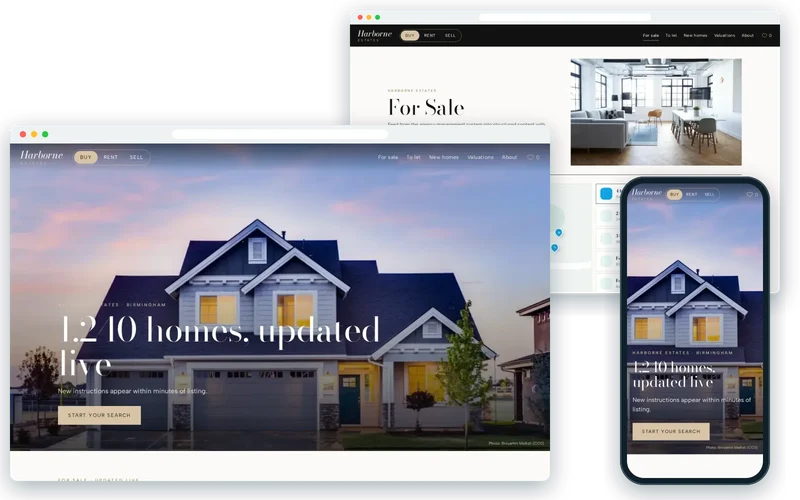
Harborne Estates demo on desktop and phone

On location

  • House Home — Harborne Estates
    House HomePhoto: Binyamin Mellish (CC0)
  • Interior Design — Harborne Estates
    Interior DesignPhoto: Breather (CC0)
  • House Interior — Harborne Estates
    House InteriorPhoto: NeONBRAND (CC0)
  • Bedroom Bed — Harborne Estates
    Bedroom BedPhoto: Mary Whitney (CC0)
  • House Home — Harborne Estates
    House HomePhoto: Mike Birdy (CC0)

About the Project

This case study describes a headless estate agency website built for a regional agency whose listings were always a day behind. Properties arrived from the agency management system as a nightly feed, so new instructions appeared the next morning and sold homes lingered online. The old site also rendered every search from the database on request, which made it slow exactly when portal traffic spiked, and the marketing team could not publish an area guide without asking a developer.

We separated the two kinds of content the agency publishes. Listings now sync from the agency system every few minutes into a structured store and are served as statically generated pages that revalidate whenever a property changes. Area guides, team profiles and valuation content live in a headless CMS that marketing controls. Search combines filters with a map, and valuation requests land in the agency system as qualified leads. New instructions go live within minutes instead of the next morning.

About the Client

The client is a regional estate agency covering several neighbourhoods, selling and letting homes for local owners. Its website competes for attention with the big property portals, and it matters most when a buyer has just seen a new listing and wants the details straight away.

The agency's teams had different needs. Negotiators wanted listings to appear the moment they were instructed, marketing wanted to publish guides and campaigns on its own schedule, and the directors wanted more valuation enquiries arriving in a usable form.

Project Goals

  • Publish new instructions and status changes within minutes.
  • Keep property pages fast during traffic spikes from portals and campaigns.
  • Give marketing control of area guides, team pages and campaigns.
  • Offer map and filter search that buyers and tenants find intuitive.
  • Turn valuation requests into qualified leads in the agency system.

Project Overview

The Challenge and Our Solution

The Challenge

Listings came from the agency management system as a nightly feed, so properties appeared a day late and sold properties lingered. The old site rendered every search from the database on request, which made it slow exactly when portal traffic spiked, and the marketing team could not publish area guides without a developer.

Our Solution

We split the two content types. Listings sync from the agency system every few minutes into a structured store and render as statically generated pages that revalidate on change — fast under any traffic, and accurate within minutes. Area guides, team profiles and valuation content live in a headless CMS the marketing team controls. Search combines filters with a map view, and valuation requests capture address and property details, landing directly in the agency system as leads.

Property Listing Sync Every Few Minutes

The nightly feed was replaced with a frequent sync from the agency management system. Every few minutes, new instructions, price changes and status updates are pulled into a structured store with consistent fields for price, type, bedrooms, area and features.

Because listing data is structured rather than copied into pages by hand, it can drive search, maps and property pages without any risk of the website and the agency system disagreeing for long. New instructions are now live within minutes rather than the following morning.

  • Frequent sync from the agency management system
  • Structured listing data for search, maps and pages
  • Sold and let properties update as soon as their status changes
Static Speed With Next.js Incremental Static Regeneration

Property pages are generated with Next.js and served statically, so they load quickly no matter how many people arrive at once. Incremental Static Regeneration rebuilds a page only when its listing changes, which keeps pages accurate without rebuilding the whole site.

Portal traffic spikes no longer slow the site, because visitors receive pre-built pages instead of waiting for database queries. Structured data on each property helps search engines understand price, location and availability.

Map and Filter Property Search

Buyers search in two ways at once: by what they need and by where they want to live. The search combines filters for price, property type, bedrooms, area and school catchment with a map view that updates as filters change.

Results and map pins stay in step, so a visitor can narrow a shortlist to the streets they care about and open a property from either view. The experience works on mobile as well as desktop, which is where most property browsing now happens.

Editor-Controlled Content and Valuation Lead Capture

Area guides, team profiles and campaigns live in a headless CMS, separate from listing data. Marketing publishes and updates them without developer involvement, and they appear alongside listings through the same front end.

Valuation requests start with the property address and details, then collect contact information. Each request is written straight into the agency system as a lead with the property already described, so negotiators can call back prepared instead of starting from a blank email.

Our Process

How We Delivered It

  1. Mapping the content

    We separated what changes constantly, the listings, from what marketing owns, the guides and campaigns, and designed a home for each.

  2. Building the sync

    The feed from the agency management system was replaced with a frequent sync into structured content, with checks for missing or changed fields.

  3. Front end and search

    The Next.js front end, property pages, map and filter search were built with Incremental Static Regeneration so pages stay fast and current.

  4. CMS and lead capture

    The headless CMS was set up for marketing, and valuation forms were connected directly to the agency system as structured leads.

  5. Launch and handover

    We launched, checked listing freshness and page speed under load, and trained the marketing team to publish guides and campaigns independently.

Key Features

What We Delivered

  • Minutes-fresh listing sync

    Feed from the agency management system into structured content with incremental rebuilds.

  • Map & filter search

    Combined map and filter search over price, type, bedrooms, area and school catchment.

  • Editor-controlled content

    Area guides, team profiles and campaigns managed in the CMS, separate from listing data.

  • Valuation lead capture

    Address-led valuation requests written straight into the agency system.

Outcome

Results and Impact

  • New instructions live within minutes instead of the next morning.
  • Property pages served statically, so portal traffic spikes no longer slow the site.
  • Marketing publishes area guides and campaigns without developer involvement.
  • Valuation requests arrive in the agency system as qualified leads with property detail.

Client Feedback

What the Client Says

★★★★★

New instructions appear on the site within minutes of being listed.

Branch PartnerRegional estate agency

Services

Services Behind This Project

The Next.js, Headless CMS, React expertise we used to build this headless cms website — and can bring to yours.

  • Next.js Development

    Next.js websites and web apps with server-side rendering, static generation, image optimisation and route-level code splitting for top Core Web Vitals.

  • Headless CMS Development

    Headless WordPress, Strapi, Sanity and Contentful builds with a React or Next.js front end — one content source for web, app and partner channels.

  • React Development

    Custom React.js front ends, dashboards and single-page applications built with TypeScript, reusable components and server-side rendering for SEO.

FAQ

Frequently Asked Questions

What does headless mean for an estate agency website?

A headless site separates where content is managed from how it is displayed. Listings come from your agency system, guides and campaigns from a CMS, and a fast front end such as Next.js presents both. Each part can change without rebuilding the others.

How quickly can new listings appear on the website?

With a frequent sync from the agency management system and pages that regenerate when a listing changes, new instructions can appear within minutes. The exact interval depends on what your agency system's feed or API allows.

Does a headless website help with SEO for property listings?

It can. Fast, statically generated pages, clean URLs and structured data for each property give search engines clear, current information. Area guides published regularly through the CMS also build relevance for local searches.

Can we keep using our current agency management software?

Usually, yes. We integrate with the system you already use through its feed or API, rather than asking negotiators to change how they work. The integration effort depends on the data and access your software provides.

How do valuation requests reach our negotiators?

Requests are written into the agency system as leads, including the property address and details the owner provided. Negotiators see them where they already work and can call back prepared.

What affects the cost of an estate agency website like this?

Key factors are the agency system integration, search and map features, the number of content types in the CMS, valuation and enquiry flows, and design work. Reusing a proven listing sync and search pattern helps keep the project focused.

Similar Work

Related Projects

Case studies built with the same technologies or for similar needs.

  • Kestrel Wealth demo — home page
    • Next.js
    • React
    • TypeScript

    Headless CMS Website

    Wealth Management Insights Hub

    A Next.js front end over headless WordPress that took a compliance-heavy content library from slow to near-instant.

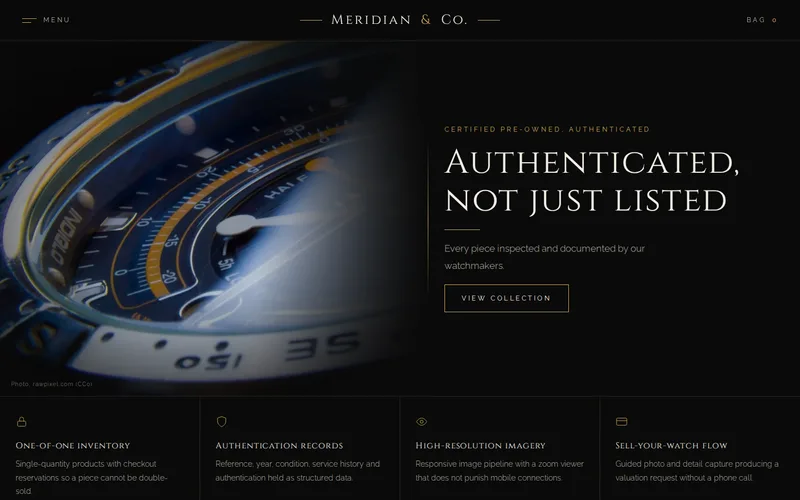
  • Watch Clock — Meridian & Co.
    • Shopify Storefront API
    • Next.js
    • React

    Headless Shopify eCommerce

    Pre-Owned Luxury Watch Storefront

    A headless Shopify storefront for one-of-one inventory, with authentication records and a sell-your-watch flow.

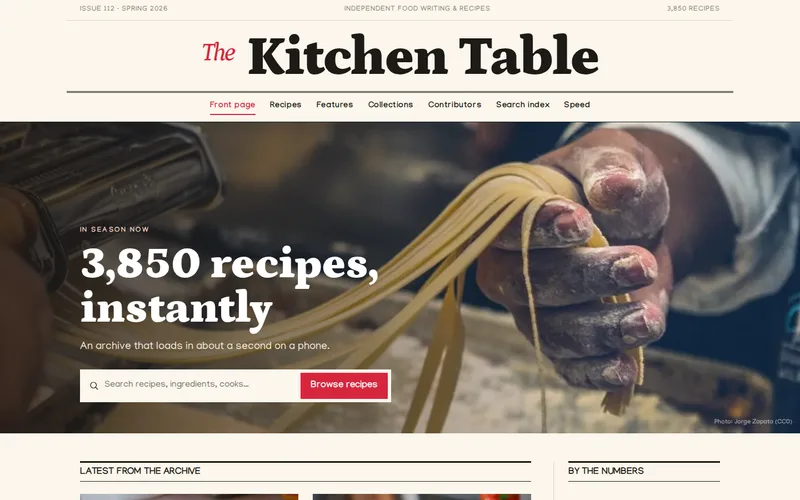
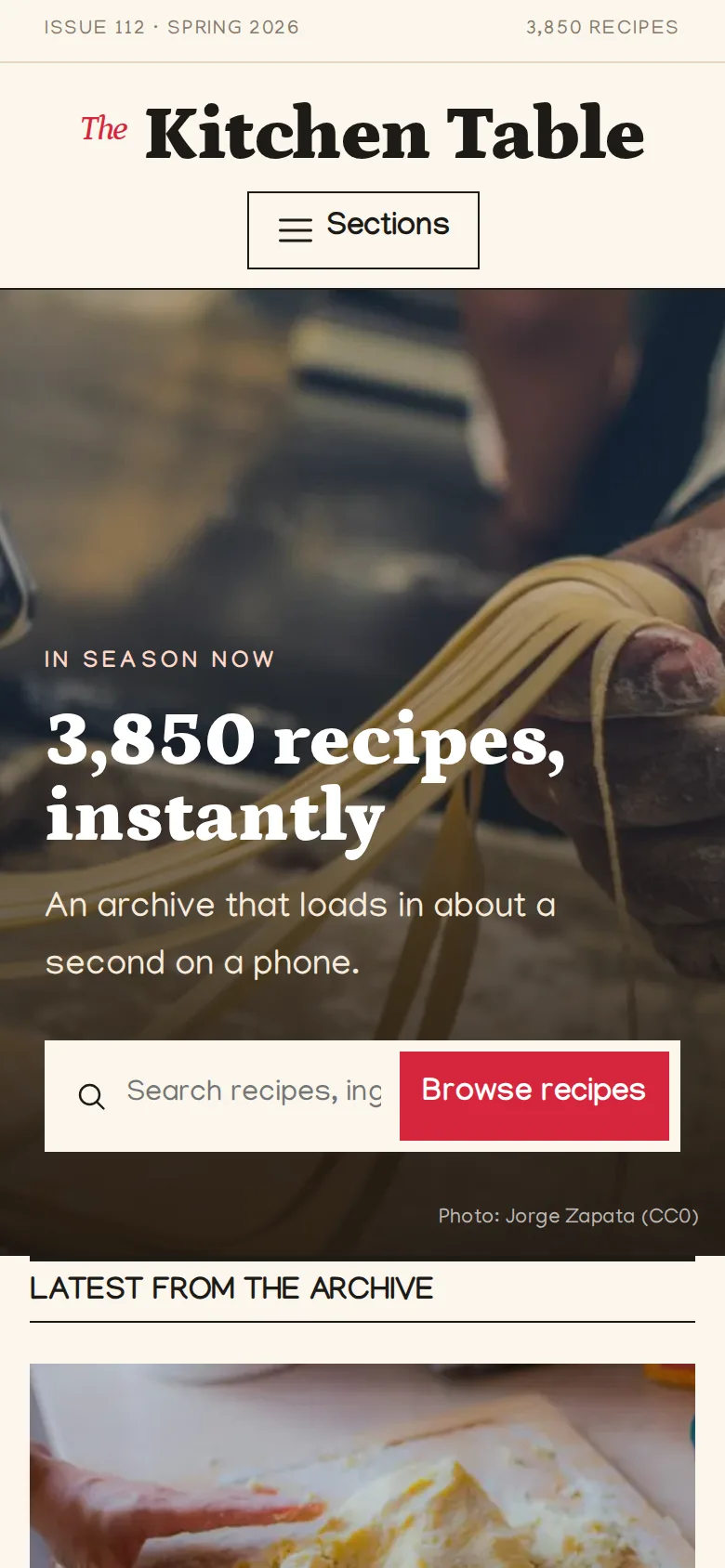
  • Herbs Spices — The Kitchen Table
    • Astro
    • Svelte
    • TypeScript

    Publishing Website

    Food Magazine & Recipe Archive

    An Astro rebuild of a 3,850-recipe archive that cut JavaScript by two thirds and made mobile pages load in about a second.

  • Semi trucks line up to pick — Northline Freight
    • React
    • TypeScript
    • Node.js

    Web Application Development

    Freight Dispatch & Driver Tracking Platform

    A live dispatch board built in React and Node.js that replaced a spreadsheet-and-phone workflow for 120 drivers.

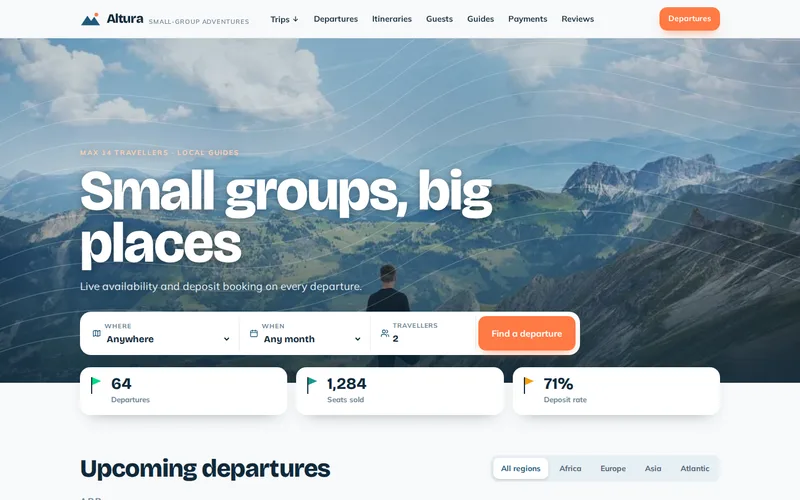
  • Guy Man — Altura Tours
    • Vue 3
    • Nuxt
    • TypeScript

    Booking Platform Development

    Adventure Tour Booking & Itinerary Platform

    A Vue 3 and Nuxt platform handling departures, seat availability, deposits and guide assignments for multi-day tours.

  • Power Lines — Gridline Inspections
    • Progressive Web App
    • Service Workers
    • Workbox

    Progressive Web App

    Utility Inspection Field App (PWA)

    An installable, offline-first progressive web app used by inspection crews in places with no usable signal.

Let’s Connect

Want Results Like These?

Share your project details and our experts will get back to you within one business day with the best solution — free consultation, no obligation.