
Blog
Web Development Blog
Guides, comparisons and practical tips on web development, WordPress, eCommerce and website performance from the WebCentauri team.
Latest Articles
Clear, jargon-free advice to help you plan, build and grow a better website.
Showing all 37 articles
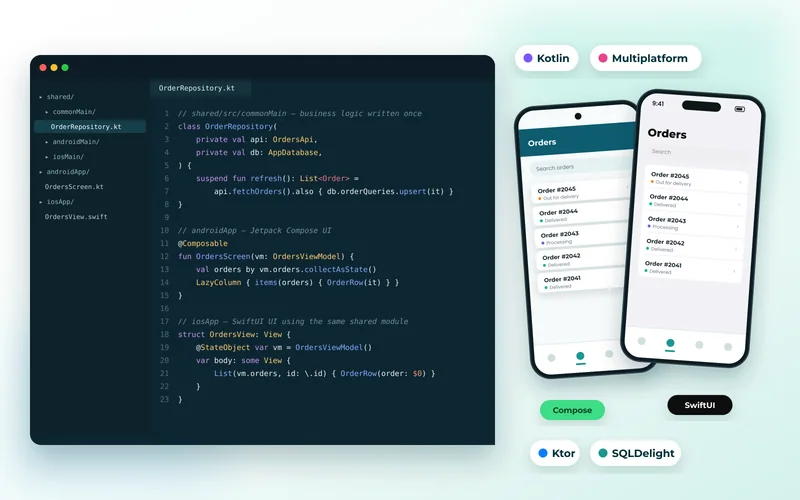
SwiftUI vs Jetpack Compose: Building Native Interfaces Today
Both platforms have replaced their old UI toolkits with declarative ones that look remarkably alike. That convergence changes how native apps get built.
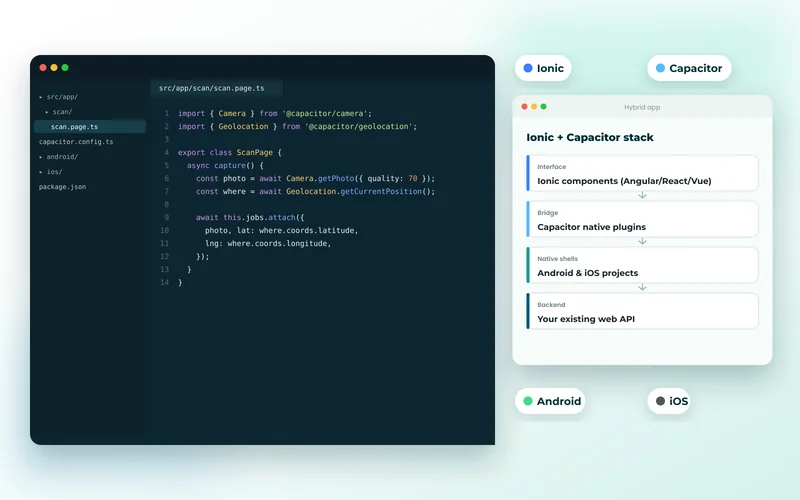
Ionic and Capacitor: Getting a Web App Into the App Stores
If you already have a web application, Capacitor can wrap it into real iOS and Android apps with native capabilities. Sometimes that is all you need.
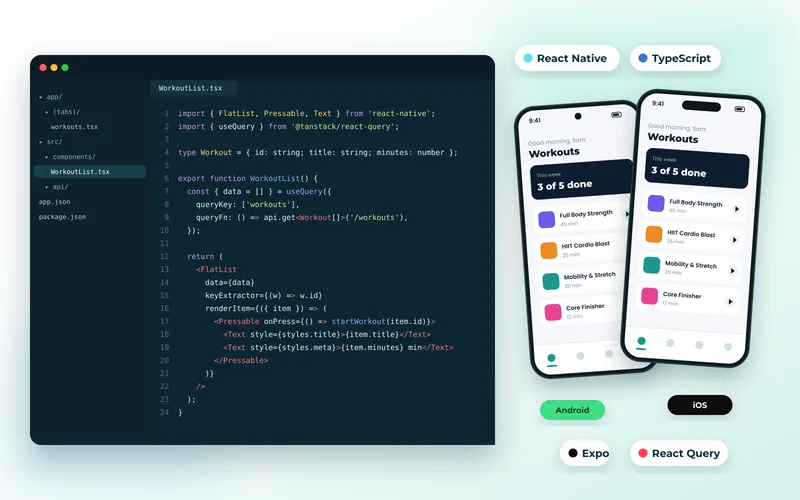
React Native's New Architecture: What Actually Changed
The bridge is gone, replaced by direct communication between JavaScript and native code. Here is what that means for apps you are building or maintaining.
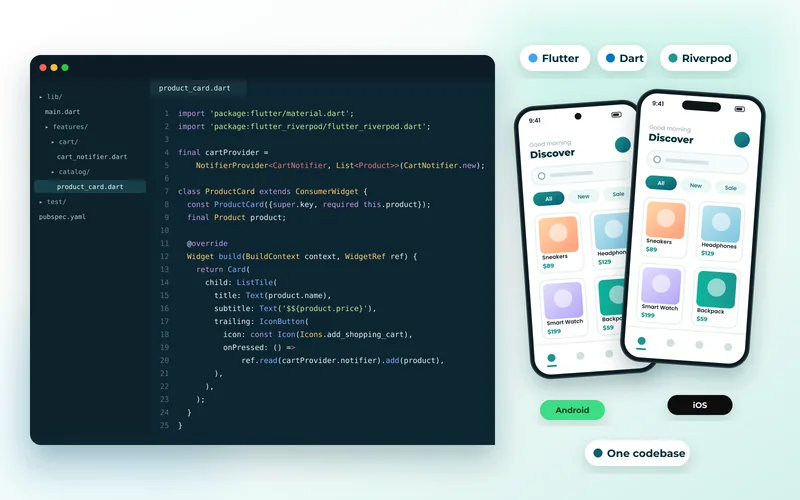
Flutter Beyond Mobile: Web and Desktop From One Codebase
Flutter now targets web, Windows, macOS and Linux as well as phones. That is genuinely useful for some products and a poor fit for others.
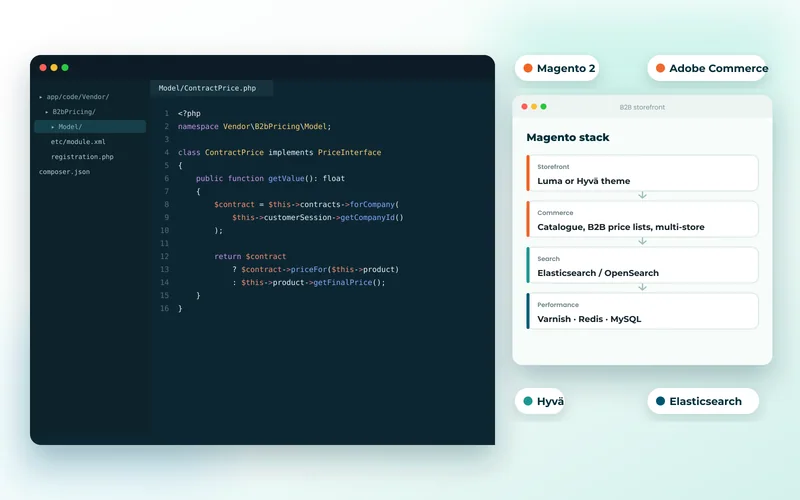
Magento 2 Performance Tuning: Where the Time Goes
Magento is powerful and unforgiving. A misconfigured store is slow no matter how good the hosting. These are the settings that actually move the needle.
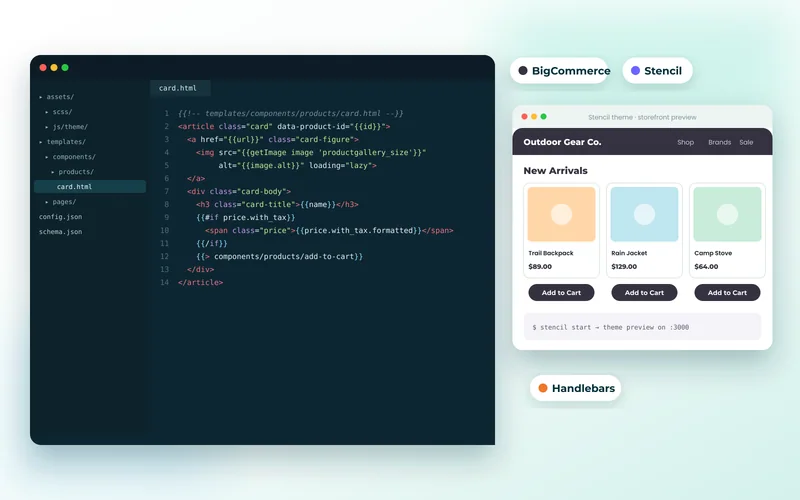
BigCommerce for B2B: Price Lists, Customer Groups and Quotes
B2B selling needs customer-specific pricing, purchase orders and approval flows. BigCommerce handles more of that natively than most platforms.
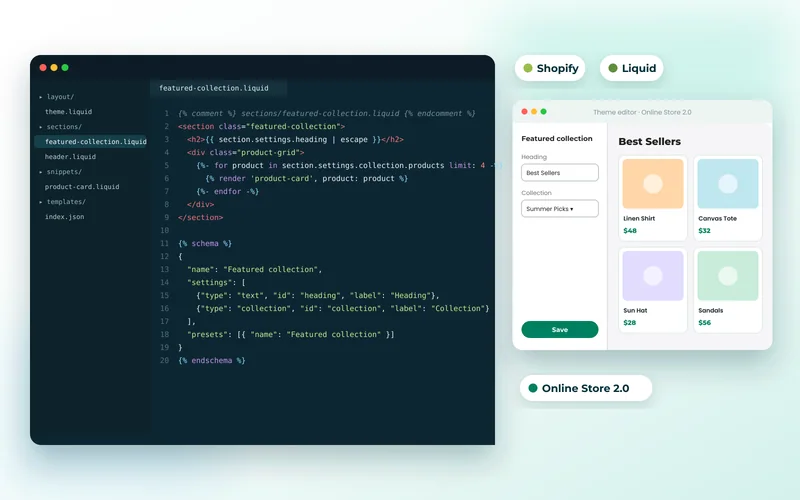
Shopify Apps vs Custom Development: When to Build
Every Shopify problem has an app. Installing ten of them has a cost you pay every month and on every page load. Here is where the line sits.
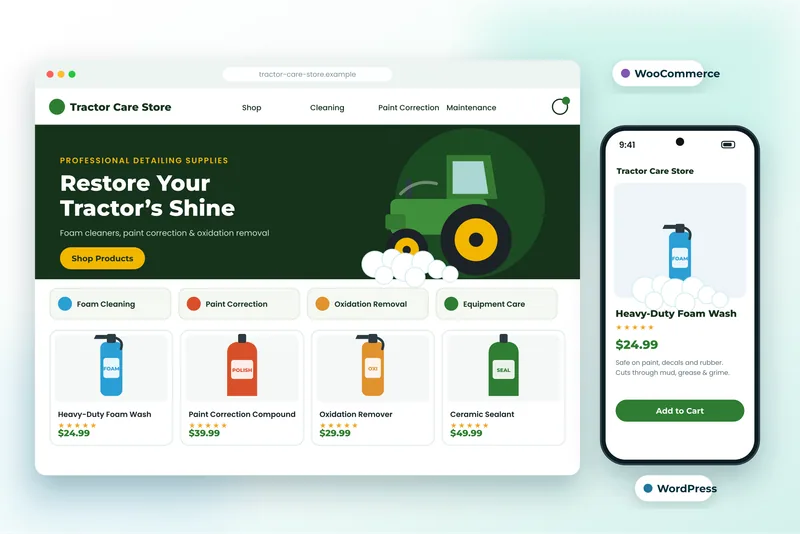
Scaling WooCommerce: Making Large Catalogues Fast
WooCommerce is often blamed for being slow at scale. Usually the platform is not the problem — the database, the plugins and the hosting are.
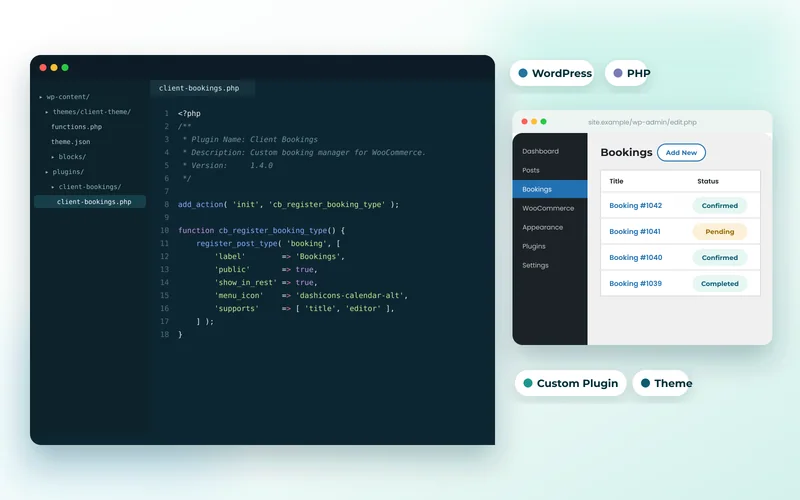
Custom WordPress Themes vs Page Builders: The Real Trade-Off
Page builders make the first month easy and the next three years harder. A custom theme does the opposite. Here is how to choose deliberately.
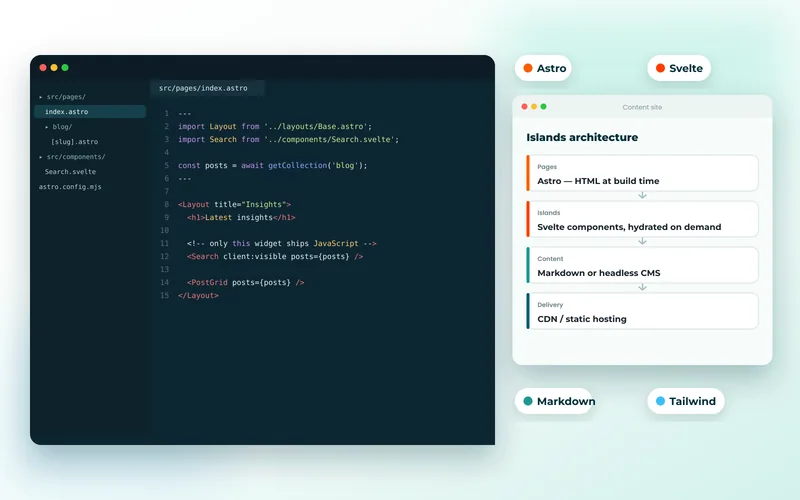
Astro and Svelte: Shipping Less JavaScript on Purpose
Most sites send far more JavaScript than they need. Astro sends almost none by default, and Svelte compiles the framework away. Both make pages measurably faster.
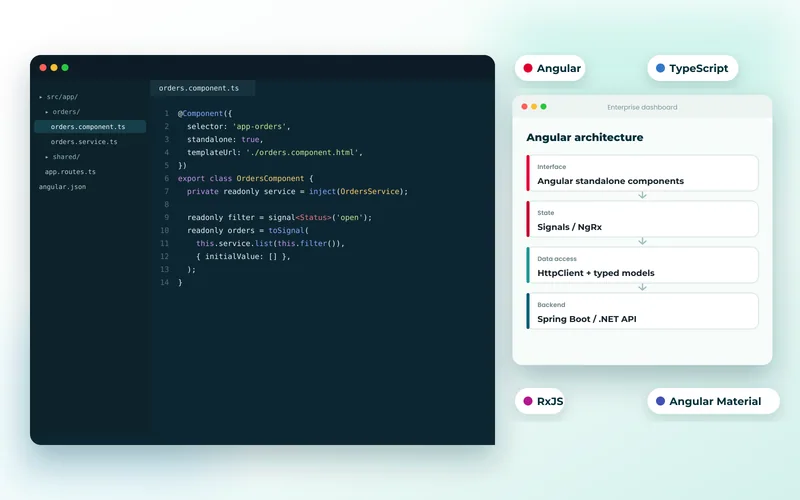
Angular for Large Applications: When Structure Beats Flexibility
Angular makes more decisions for you than any other major framework. On a big, long-lived application maintained by a rotating team, that is the feature.
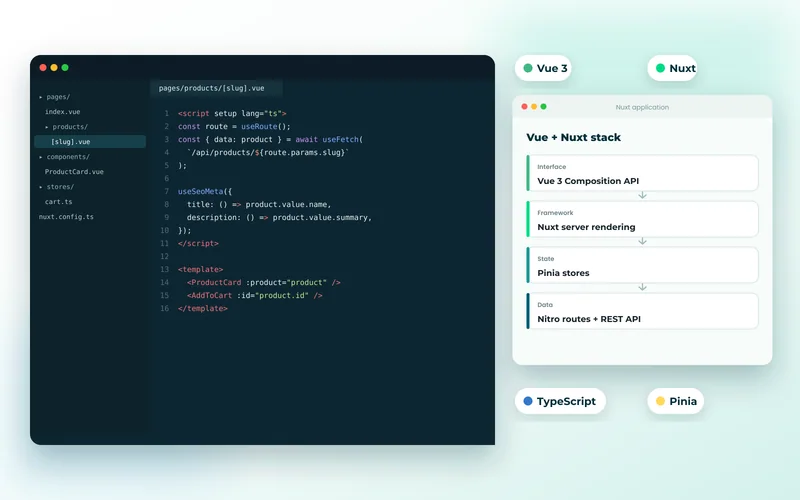
Nuxt for Content-Heavy Sites: Vue With the Hard Parts Solved
Nuxt does for Vue what Next.js does for React — rendering, routing and SEO handled — with a gentler learning curve that suits mixed teams.
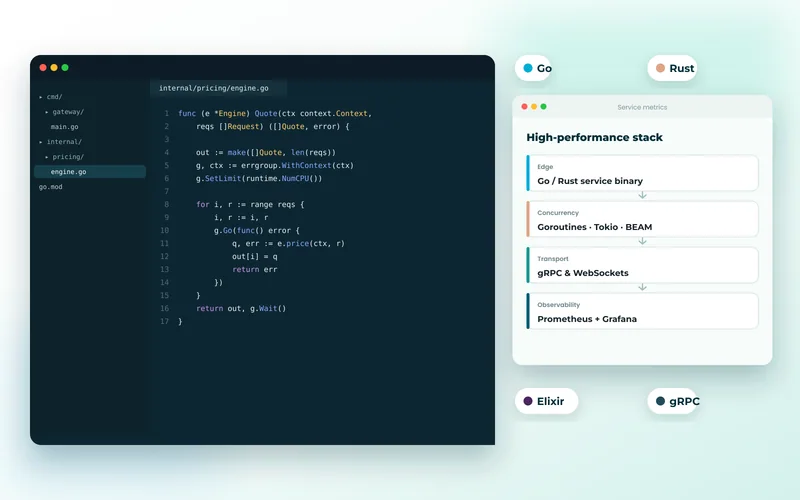
Go, Rust and Elixir: When Specialist Languages Are Worth It
Three languages that solve specific problems extremely well. Using them for the right reason is valuable; using them for novelty is expensive.
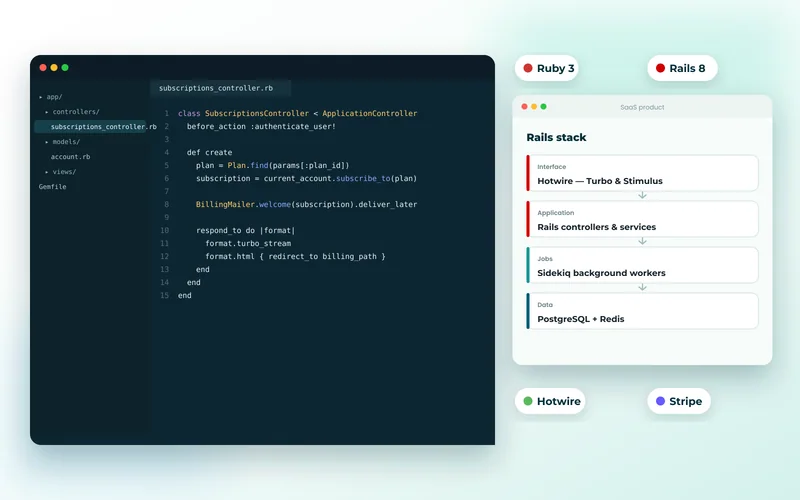
Is Ruby on Rails Still a Good Choice?
Rails is no longer the loudest framework, but it is still among the fastest ways to turn an idea into a working product. Here is where it stands.
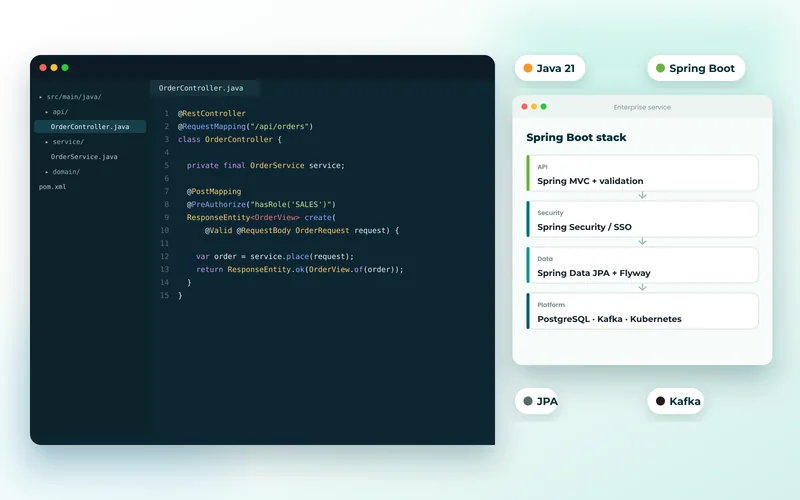
Spring Boot for Enterprise Integration: Why Java Still Wins
When a system has to talk to a dozen others and keep running for a decade, Java and Spring Boot remain hard to beat. Here is why.
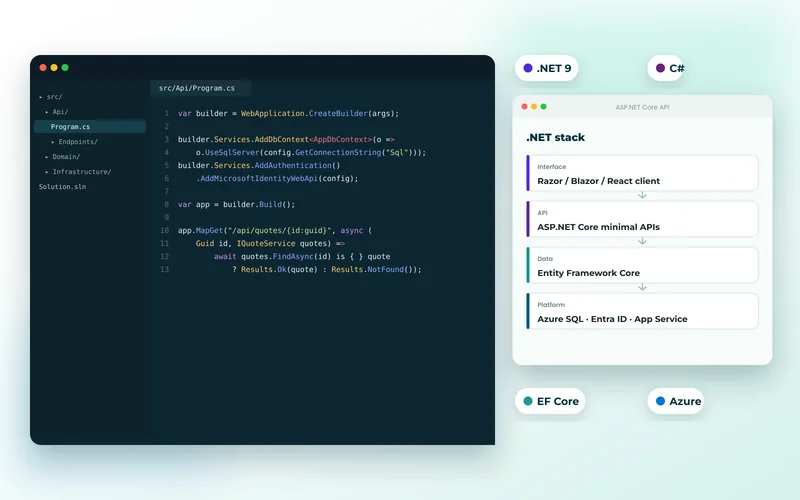
When .NET Is the Right Choice for Your Web Application
.NET is fast, strongly typed and exceptionally well tooled. Here is where that genuinely matters, and where it is more structure than your project needs.
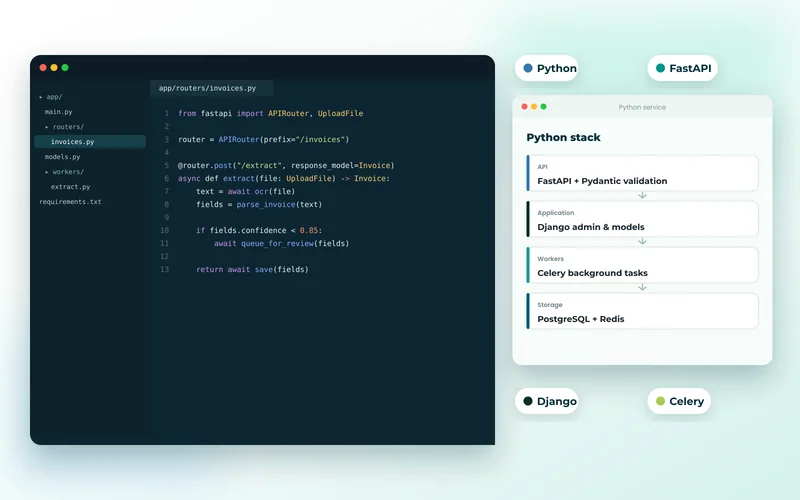
Django vs FastAPI: Choosing a Python Web Framework
Django gives you a complete application with an admin panel. FastAPI gives you a fast, typed API and nothing else. The right answer depends on what you are building.
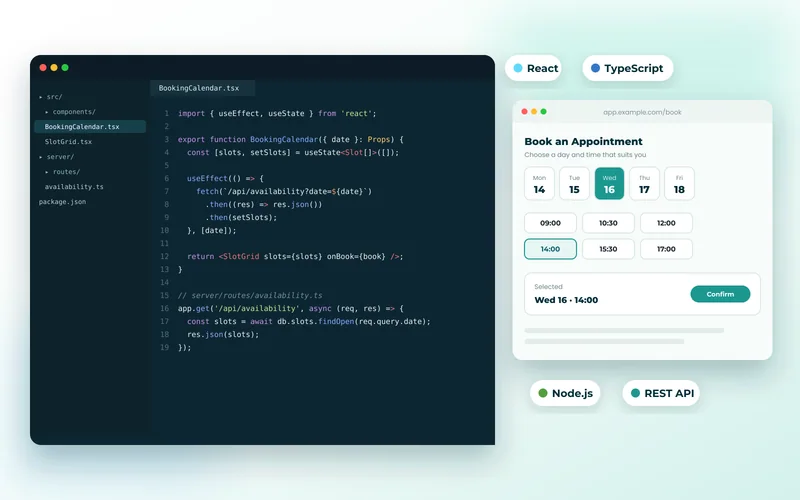
Node.js for Real-Time Features: Tracking, Chat and Live Updates
Live dashboards, driver tracking, notifications and chat all need a server that can hold thousands of open connections. That is what Node is built for.
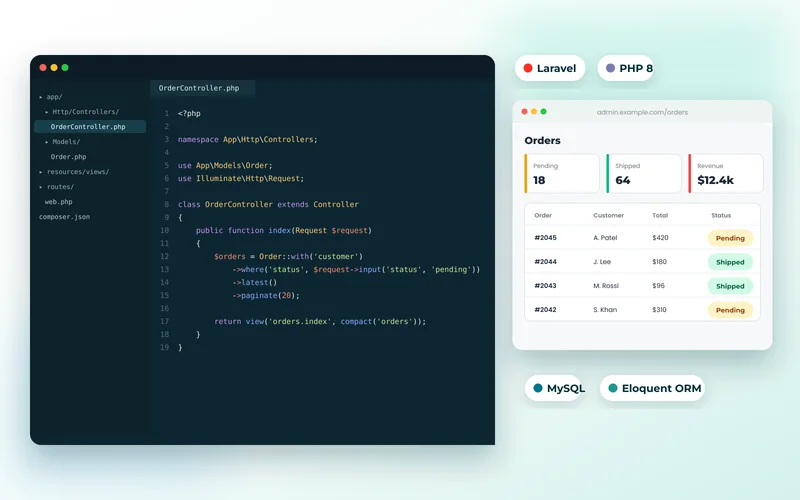
Laravel for Business Applications: What You Get Out of the Box
Laravel ships with the parts every business application needs anyway — auth, queues, scheduling, permissions. That is why it delivers so quickly.
Why Next.js Became the Default for React Websites
React on its own leaves routing, rendering and SEO to you. Next.js answers all three, which is why most serious React sites now start there.
Common WordPress Errors and How to Fix Them Safely
The white screen, the database connection error, the broken login. What each one actually means, how to fix it, and how to avoid causing a worse problem.

The Technical SEO Checklist Every Business Site Should Pass
Technical SEO is not about tricks. It is about making sure search engines can find, read and trust your pages. Here is the checklist we work through.
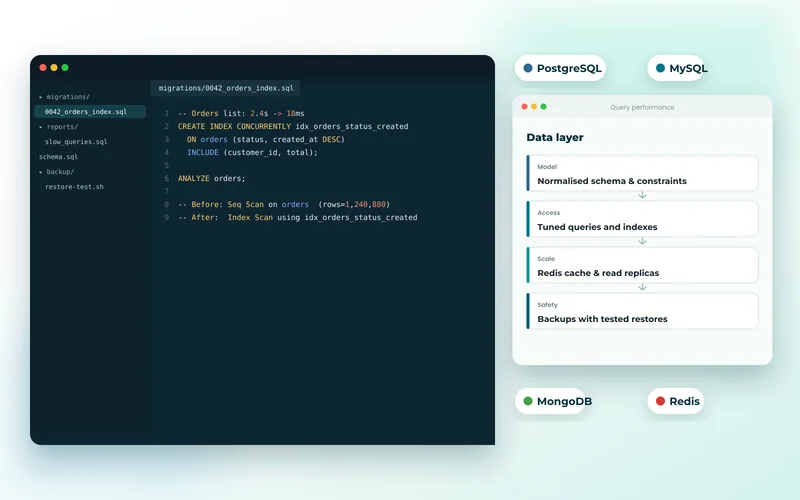
Database Performance: Why Your Site Slows Down as It Grows
Sites rarely get slower because of traffic. They get slower because queries that were fine with a thousand rows are not fine with a million.
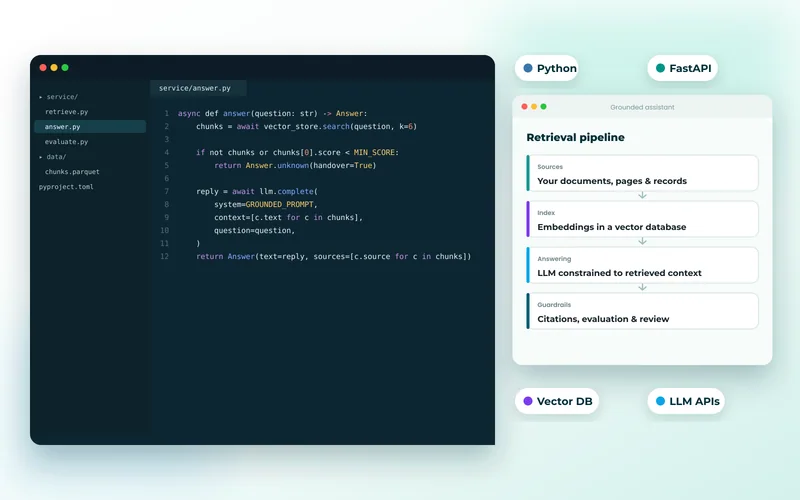
Adding AI to Your Website: Use Cases That Actually Pay Off
Most AI website projects fail because they start from the technology. These start from a measurable business problem — and that is why they work.
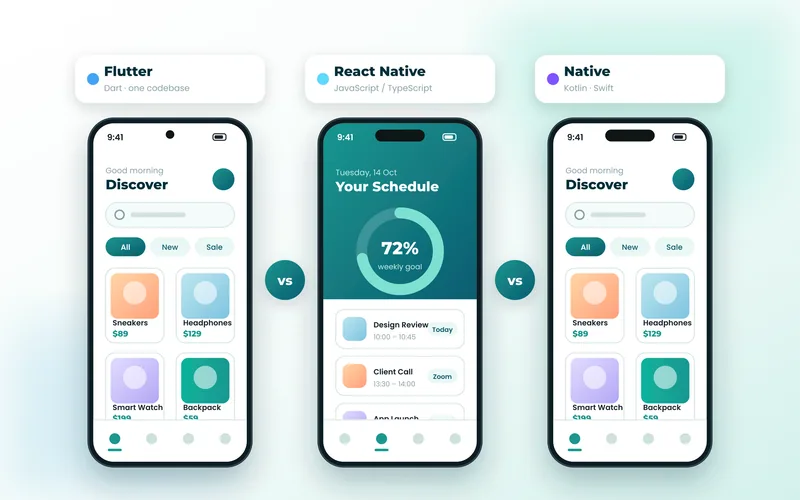
Flutter vs React Native vs Native: How to Choose the Right Technology for Your Mobile App
Planning an Android and iPhone app? Compare Flutter (Dart), React Native and native Kotlin/Swift on performance, cost, time to market and long-term maintenance.
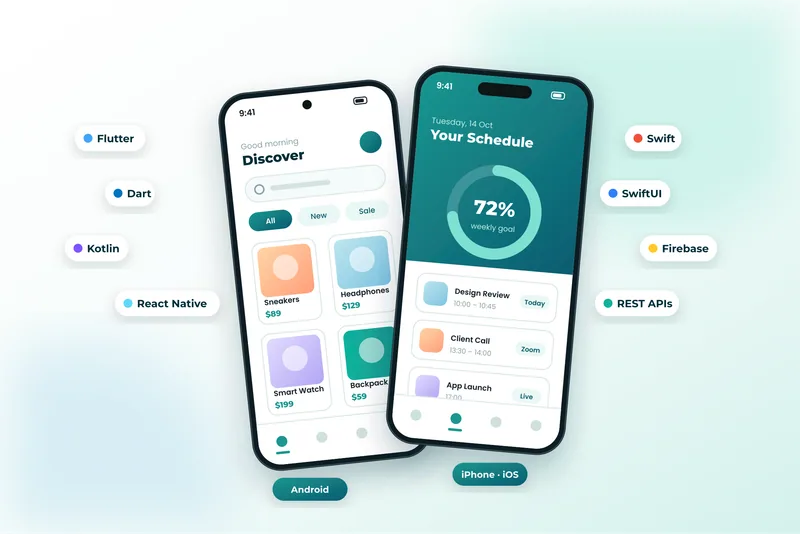
How Much Does It Cost to Build a Mobile App?
App quotes vary enormously because the word "app" covers wildly different things. Here is what actually drives the number, with realistic ranges.
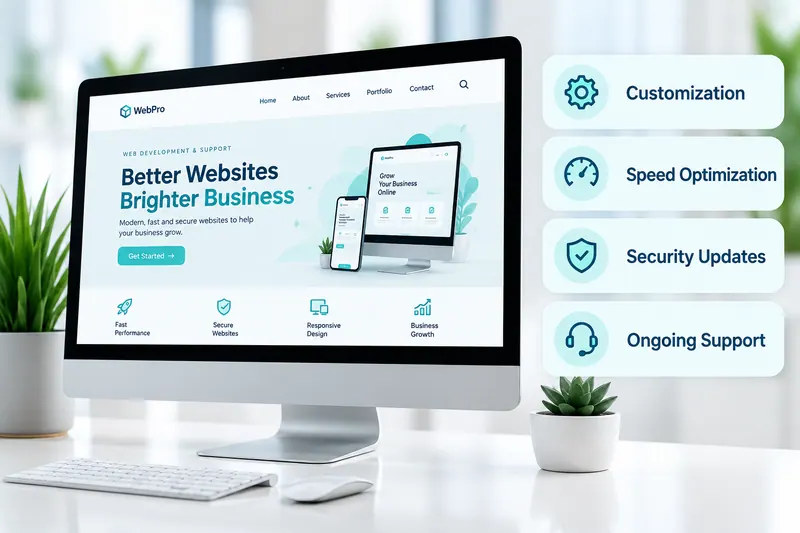
The Essential Website Maintenance Checklist for Business Owners
Keep your website secure, fast and reliable with this weekly, monthly and quarterly maintenance checklist — covering updates, backups, security, speed and SEO.
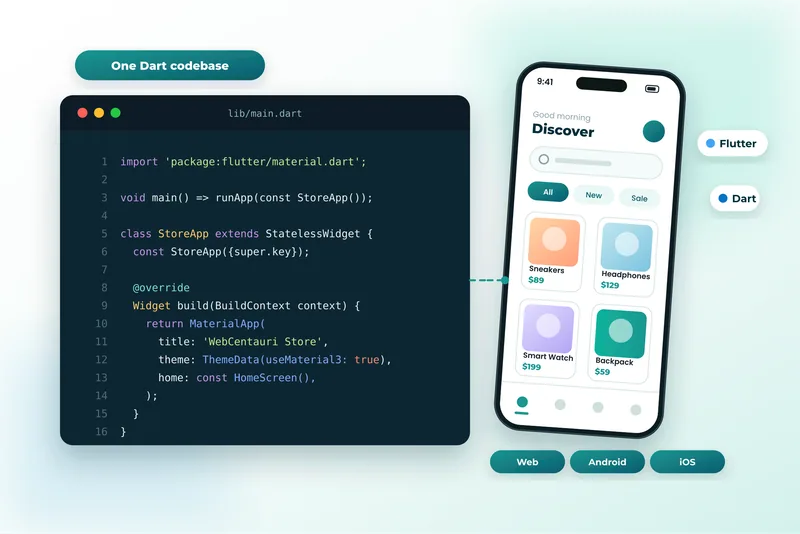
Kotlin Multiplatform vs Flutter: Two Ways to Share Mobile Code
Flutter shares the entire app including the UI. Kotlin Multiplatform shares the logic and keeps native interfaces. That single difference drives everything else.

Headless Commerce: When Decoupling Your Storefront Pays Off
Headless commerce promises speed and freedom, and charges for it in complexity. Here is how to judge whether your store is one of the ones that benefits.

Shopify vs WooCommerce vs BigCommerce: Which eCommerce Platform Fits Your Store?
Compare Shopify, WooCommerce and BigCommerce on cost, ease of use, customisation, scalability and SEO to find the best eCommerce platform for your business.
Magento to Shopify Migration: What to Plan Before You Move
Replatforming an established store is mostly a data and SEO exercise, not a design one. Here is the sequence that protects your rankings and your revenue.

10 Proven Ways to Speed Up a WordPress Website and Improve Core Web Vitals
A slow WordPress site costs rankings and sales. These ten practical fixes improve load times and Core Web Vitals — from image formats to caching and hosting.
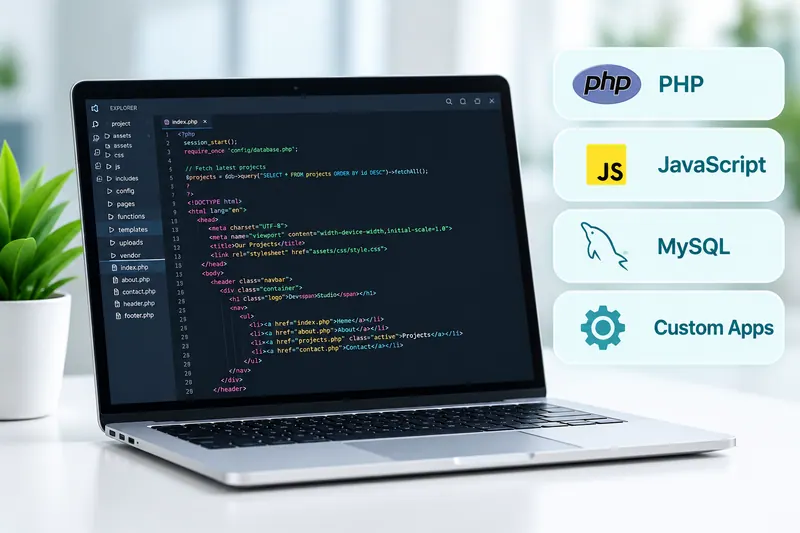
Node.js vs Laravel vs Django vs .NET: Choosing a Backend Stack
Your backend choice affects hosting costs, hiring and how fast you can ship for years. We compare the four most common options on the criteria that actually matter.
React vs Vue vs Angular vs Svelte: Choosing a Front-End Framework
Four mature front-end frameworks, four different philosophies. We compare hiring, performance, learning curve and long-term maintenance rather than benchmark trivia.
Custom Website vs WordPress: How to Choose the Right Platform for Your Business
Should you build on WordPress or invest in a fully custom website? We compare cost, flexibility, performance, security and maintenance to help you decide.
Progressive Web Apps vs Native Apps: When a PWA Is Enough
A PWA can be installed, work offline and send notifications without an app store. Here is what it can genuinely do, where native still wins, and how to decide.
Headless CMS vs Traditional CMS: Which Should You Choose?
A headless CMS separates your content from how it is displayed. We explain what that changes in practice, what it costs, and when a traditional CMS is still the better answer.
Let’s Connect
Let’s Build Something Amazing Together
Share your project details and our experts will get back to you within one business day with the best solution — free consultation, no obligation.