

Drupal Website

University Faculty & Research Portal

A multilingual Drupal portal for 6,800 pages, 140 editors and three languages, built to WCAG 2.2 AA.

View live demo Opens a working demo with sample content in a new tab.
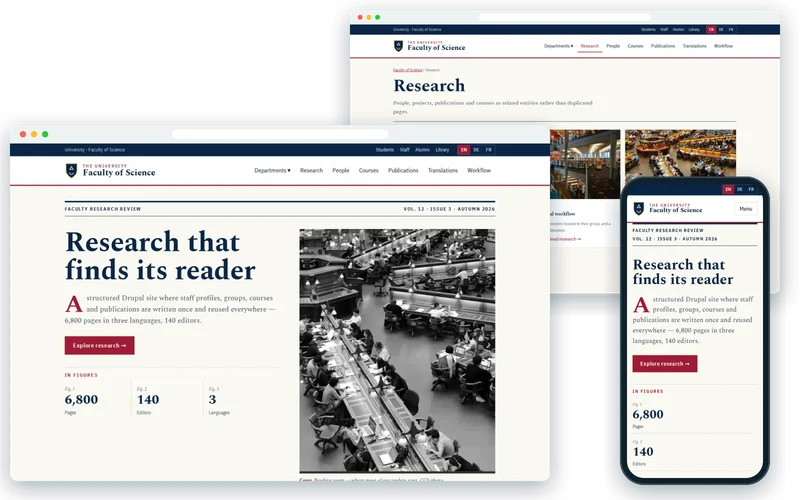
Faculty of Science demo on desktop and phone

On location

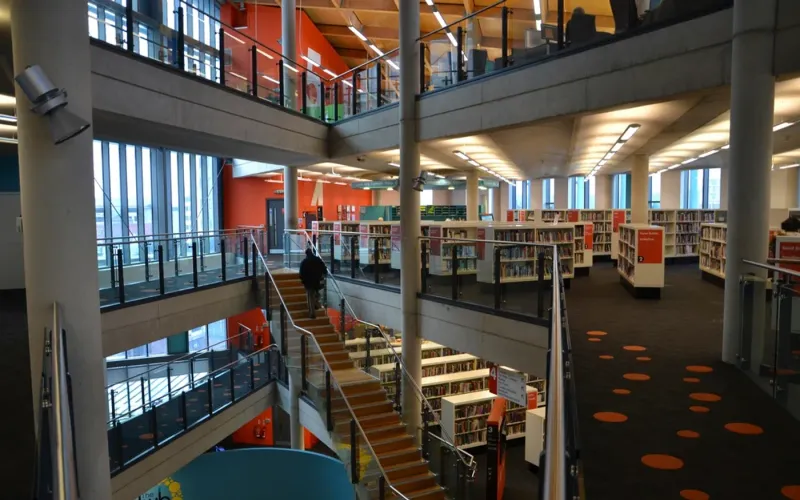
  • Free big open, multiple level — Faculty of Science
    Free big open, multiple levelCC0 photo
  • Free big open, multiple level — Faculty of Science
    Free big open, multiple levelCC0 photo
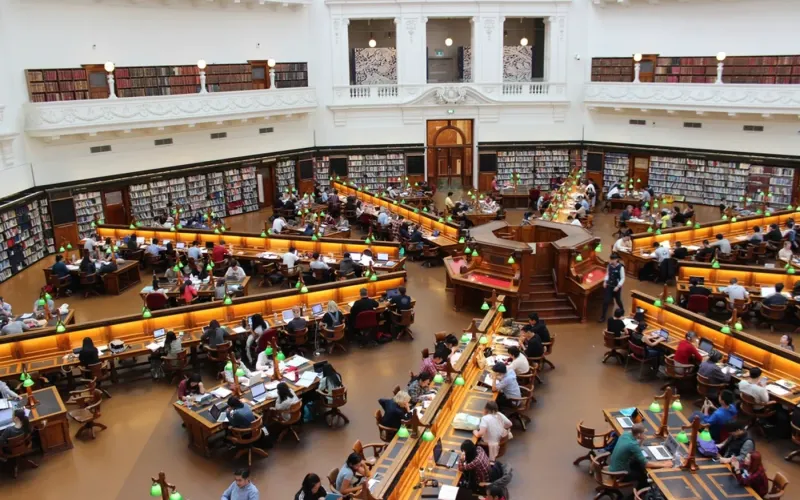
  • La Trobe reading room State — Faculty of Science
    La Trobe reading room StateCC0 photo
  • Students reading library — Faculty of Science
    Students reading libraryCC0 photo
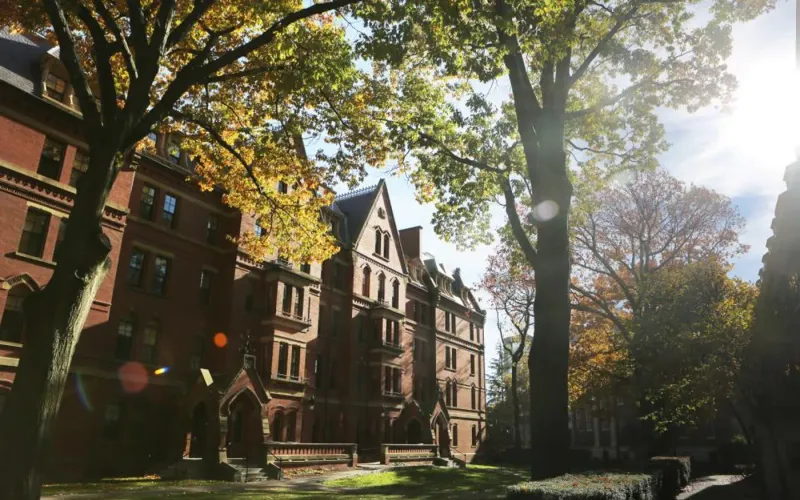
  • Harbad University — Faculty of Science
    Harbad UniversityPhoto: Leeroy (CC0)

About the Project

This Drupal university website project moved a faculty of science off an unsupported Drupal 7 installation and onto a structured, multilingual Drupal 10 portal. Over the years the old site had grown into 6,800 pages maintained by 140 editors in three languages, with duplicated staff profiles, course pages that disagreed with each other and translations that had quietly drifted apart.

Rather than copying the mess across, we modelled the faculty’s content properly first, migrated every page with redirects in place, gave each research group control of its own corner of the site and built the theme to pass an independent WCAG 2.2 AA accessibility audit.

About the Client

The client is a university faculty of science with research groups across several departments, taught courses, a publications output and a large body of policies and operational pages. Content is written by academics, administrators and communications staff, many of them editing only occasionally.

Drupal 7 had reached end of life, which made the site a standing security risk, and accessibility had become a procurement requirement the old theme could not meet. The faculty publishes in three languages and needed translations it could trust.

Project Goals

  • Leave unsupported Drupal 7 behind without losing pages, links or search visibility.
  • Author each staff profile, research group and course once and reuse it wherever it is referenced.
  • Give 140 editors control of their own content, with a review step before publication.
  • Manage three languages with a clear, per-field translation status.
  • Meet WCAG 2.2 AA and prove it through an independent audit.

Project Overview

The Challenge and Our Solution

The Challenge

The faculty ran on Drupal 7, which was past end of life and therefore a standing security risk. Content had grown organically across research groups, with duplicated staff profiles, inconsistent course pages and translations that drifted apart. Accessibility was a procurement requirement the existing site did not meet.

Our Solution

We modelled the content properly first — people, research groups, projects, publications, courses and policies as distinct entity types with relationships — so a staff profile is authored once and appears wherever it is referenced. The migration ran through Drupal’s Migrate API with URL mapping and redirects for every existing page. Editorial workflow gives each research group control of its own content with a review step, translations are managed per field with a clear pending state, and the theme was built and tested to WCAG 2.2 AA.

A Content Model That Mirrors the Faculty

The research portal content model treats people, research groups, projects, publications, courses and policies as distinct entity types with relationships between them. A professor’s profile is written once; it then appears on their research group’s page, on the courses they teach and beside the publications they authored, always identical because it is the same record.

Views and Paragraphs assemble pages from this structured content, and Solr search indexes it, so visitors can search people and research by department, topic or type rather than wading through near-duplicate pages.

  • People, groups, projects, publications and courses as related entities
  • Profiles authored once, shown everywhere
  • Faceted Solr search across the faculty

Drupal 7 to Drupal 10 Migration With Every URL Accounted For

The Drupal 7 to Drupal 10 migration ran through Drupal’s Migrate API, which allowed content to be transformed into the new model rather than copied as-is. Duplicate profiles were merged, inconsistent course pages consolidated and orphaned pages identified for review. Migrations were repeatable, so they could be re-run against fresh data until the faculty was happy with the result.

Every one of the 6,800 existing pages was mapped to its new address and redirected, so links from other university sites, publications and search results continued to work after the switch.

Devolved Editing for 140 Editors

Editorial workflow gives each research group and department control over its own content, with permissions scoped so editors see and change only what they own. A review step sits before publication, letting group leads or the communications team check changes without becoming a bottleneck for everyday updates.

Editors work with structured fields rather than free-form pages, which keeps formatting consistent and makes the site much easier to maintain as people come and go.

A Multilingual Drupal Site Built to WCAG 2.2 AA

As a multilingual Drupal site, the portal manages translation per field, with a visible pending state. A page updated in one language shows which translations need attention, and nothing publishes half-translated. Editors and translators can see at a glance where each language stands.

The theme was designed and tested for accessibility from the start: keyboard operation, colour contrast, heading structure and screen-reader behaviour were checked throughout development, and the finished site passed an independent audit at WCAG 2.2 AA.

Our Process

How We Delivered It

  1. Content Audit and Modelling

    We audited the Drupal 7 content and agreed entity types and relationships with the faculty before building anything.

  2. Repeatable Migrations

    Migrate API scripts transformed and merged content and could be re-run against fresh data until the result was right.

  3. Accessible Theme Build

    The Twig theme was built and tested for keyboard use, contrast, headings and screen readers as each component was finished.

  4. Workflow and Translation Setup

    Editor roles, group permissions, review steps and per-field translation states were configured and tested with real editors.

  5. Redirects, Audit and Launch

    All existing URLs were redirected, the independent accessibility audit was completed and the new site went live.

Key Features

What We Delivered

  • Structured content model

    People, projects, publications and courses as related entities rather than duplicated pages.

  • Devolved editorial workflow

    140 editors with permissions scoped to their group, and a review step before publication.

  • Multilingual management

    Per-field translation with pending states so nothing publishes half-translated.

  • Accessible by design

    Keyboard operation, contrast, headings and screen-reader testing throughout the theme.

Outcome

Results and Impact

  • Migrated 6,800 pages from an unsupported Drupal 7 installation with redirects in place.
  • Staff profiles authored once and reused across groups, courses and publications.
  • Three languages maintained with visible translation status per field.
  • Independent accessibility audit passed at WCAG 2.2 AA.

Client Feedback

What the Client Says

★★★★★

Six thousand pages, a hundred and forty editors, three languages. The migration was boring, which was the point.

Digital LeadUniversity faculty of science

Services

Services Behind This Project

The Drupal & Joomla, PHP & Laravel expertise we used to build this drupal website — and can bring to yours.

  • Drupal & Joomla Development

    Drupal 10/11 builds, custom modules and content architecture, Joomla support, plus safe migrations and version upgrades for both.

  • PHP & Laravel Development

    Laravel web applications, custom PHP development, admin panels, APIs and legacy PHP upgrades — secure, well-structured and easy to maintain.

FAQ

Frequently Asked Questions

Why migrate from Drupal 7 rather than staying on it?

Drupal 7 has reached end of life, so it no longer receives regular security updates from the core project. Staying on it leaves a site exposed and makes it harder to meet procurement and compliance requirements. Migrating to a current version also gives the chance to fix structural problems that built up over years.

Is a Drupal 7 to Drupal 10 migration a simple upgrade?

No. The move is closer to a rebuild with automated content migration. Themes and many modules have to be redone, and the Migrate API is used to transform content into the new structure. That is also an opportunity: duplicated or inconsistent content can be cleaned up during the migration rather than copied across.

How does Drupal handle multiple languages?

Drupal supports translation at the level of individual fields, so each piece of content can carry versions in several languages. This project adds a visible pending state, so editors can see which translations need updating after a change and nothing is published half-translated.

What does WCAG 2.2 AA mean for a university website?

WCAG 2.2 AA is the widely used accessibility standard covering keyboard operation, contrast, text alternatives, structure and more. Many institutions require it by policy or procurement rules. Building and testing for it throughout development, rather than retrofitting, is far more reliable and is how this site passed its independent audit.

Can individual research groups manage their own pages?

Yes. Permissions can be scoped so each group edits only its own content, with an optional review step before publication. Because profiles, projects and publications are structured, group pages largely assemble themselves from shared records, so editors spend their time on content rather than layout.

What drives the cost of a large Drupal university website?

The main factors are the size and messiness of existing content, the complexity of the content model, the number of languages, integrations such as search and identity systems, and accessibility testing. Investing early in modelling and repeatable migrations reduces risk and avoids surprises late in the project.

Similar Work

Related Projects

Case studies built with the same technologies or for similar needs.

  • Restaurant Dining — Laurel Group
    • WordPress Multisite
    • PHP 8
    • Custom theme

    WordPress CMS Website

    Restaurant Group Multisite

    A WordPress multisite giving seven restaurants their own identity, with shared menus, bookings and gift cards.

  • Business Team — Northgate Training
    • WordPress
    • LMS & membership plugins
    • PHP 8

    WordPress CMS Website

    Accredited Training & Membership Portal

    A WordPress learning portal with courses, assessments, certificates and employer team accounts.

  • Factory machinery manufacturing — Ardley Valves
    • WordPress
    • ACF Pro
    • PHP 8

    WordPress CMS Website

    Manufacturer Technical Product Catalogue

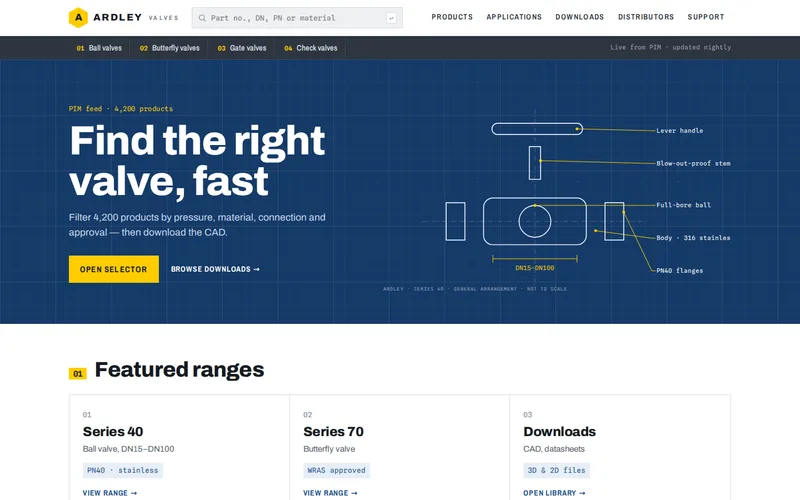
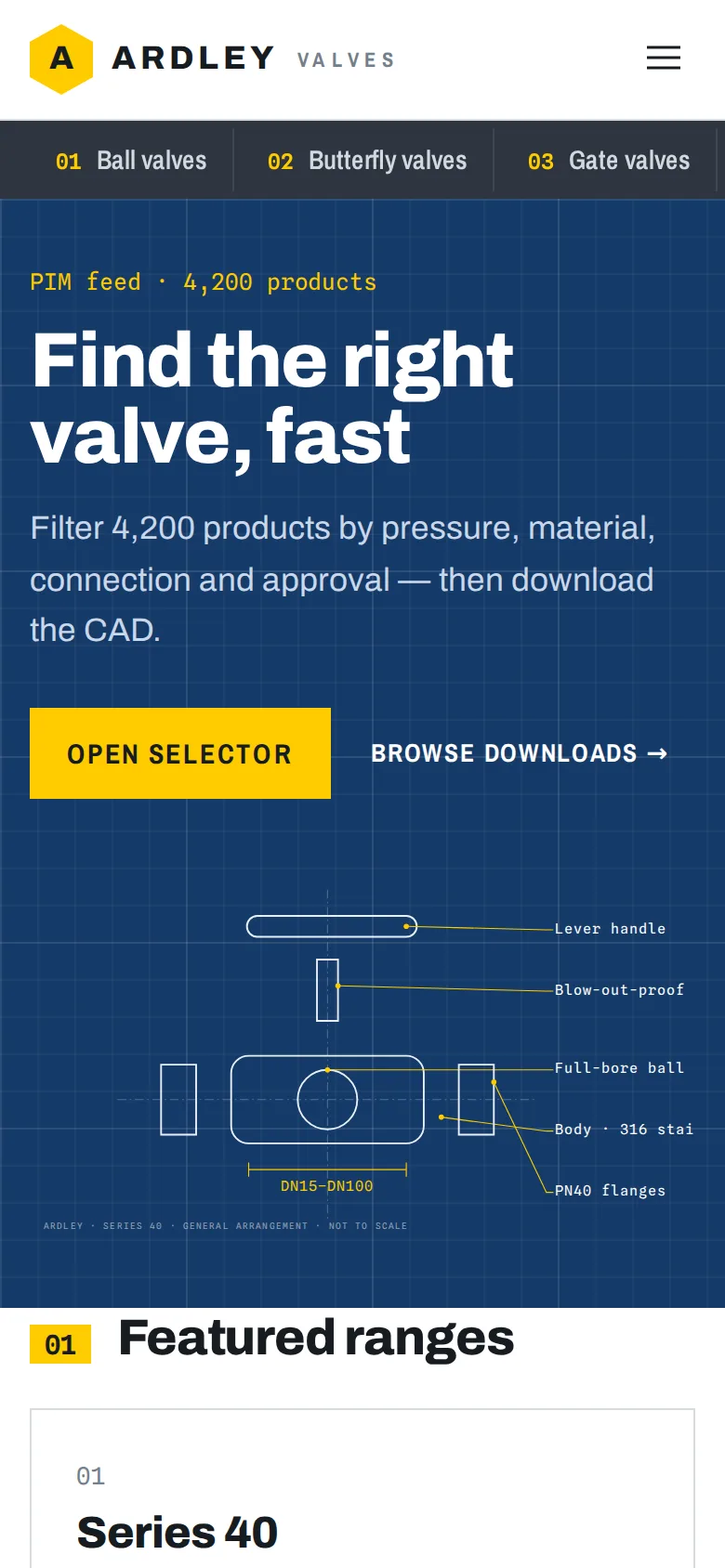
    A 4,200-product technical catalogue with specification filtering and CAD downloads, fed from the PIM.

  • Industrial Machine — Halvers Machinery
    • WordPress
    • WPML
    • PHP 8

    WordPress CMS Website

    Multilingual Manufacturer Website

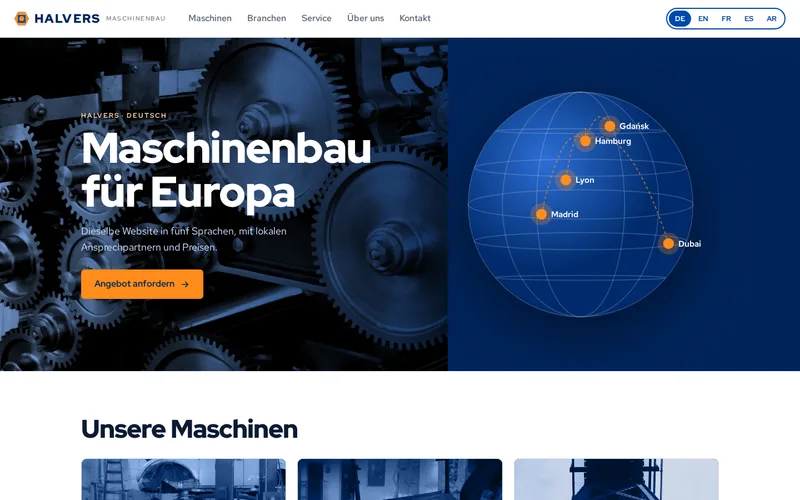
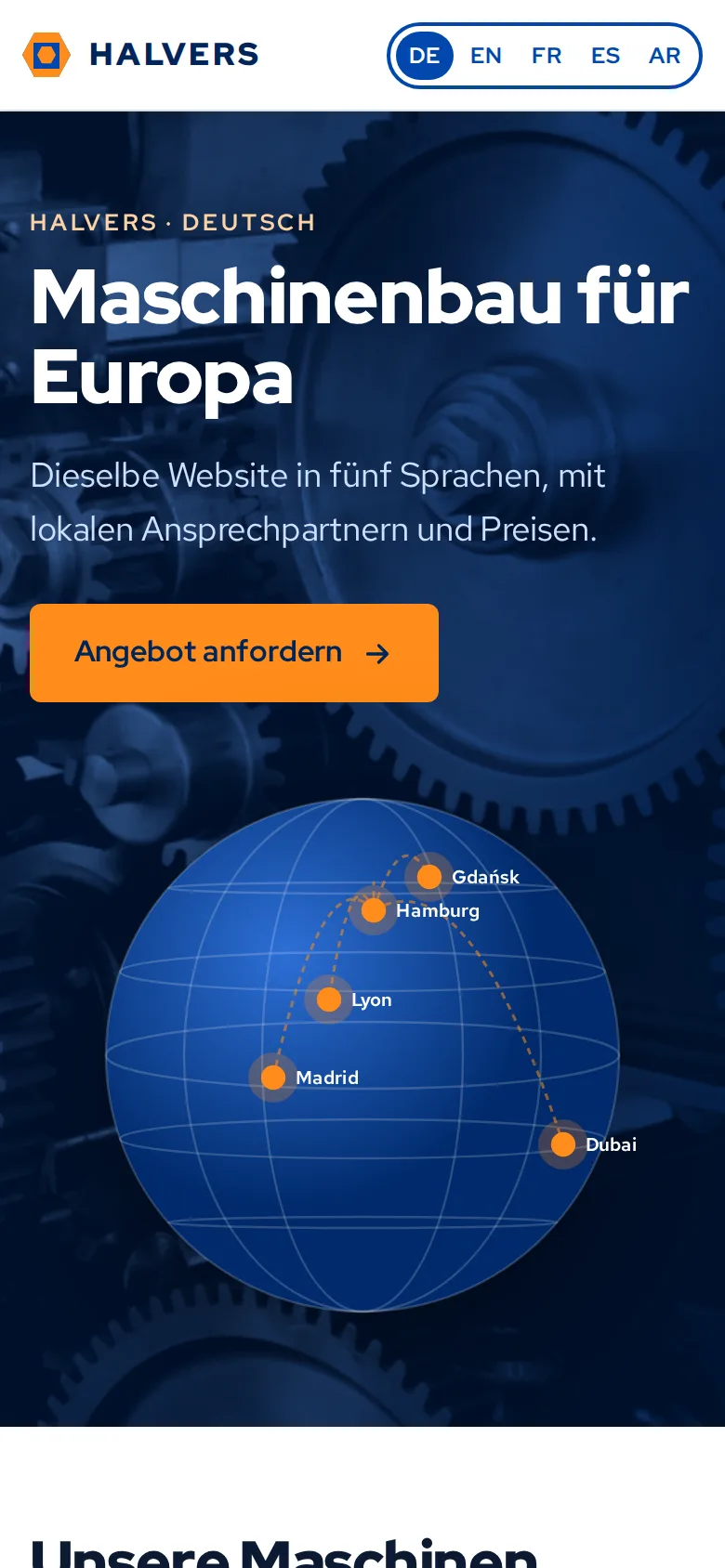
    One WordPress site in five languages with regional contacts, hreflang done properly and translation workflow.

  • Gears Chains — Hartwell Industrial
    • Magento 2
    • PHP 8
    • MySQL

    Magento eCommerce

    Industrial Parts B2B Store

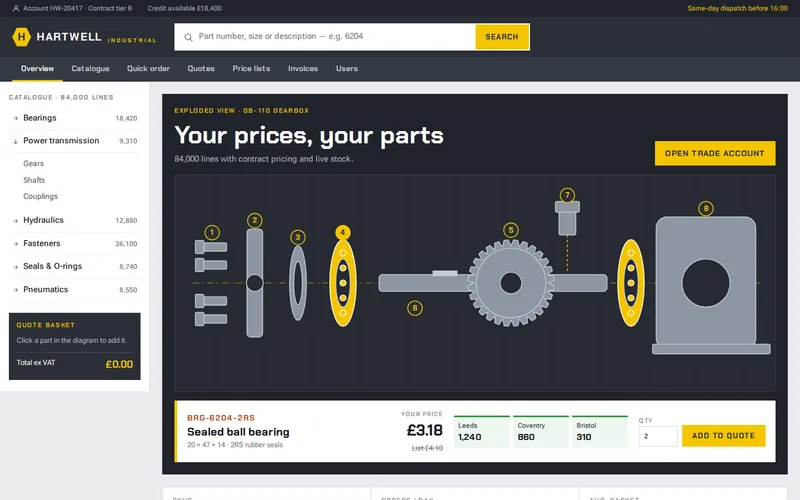
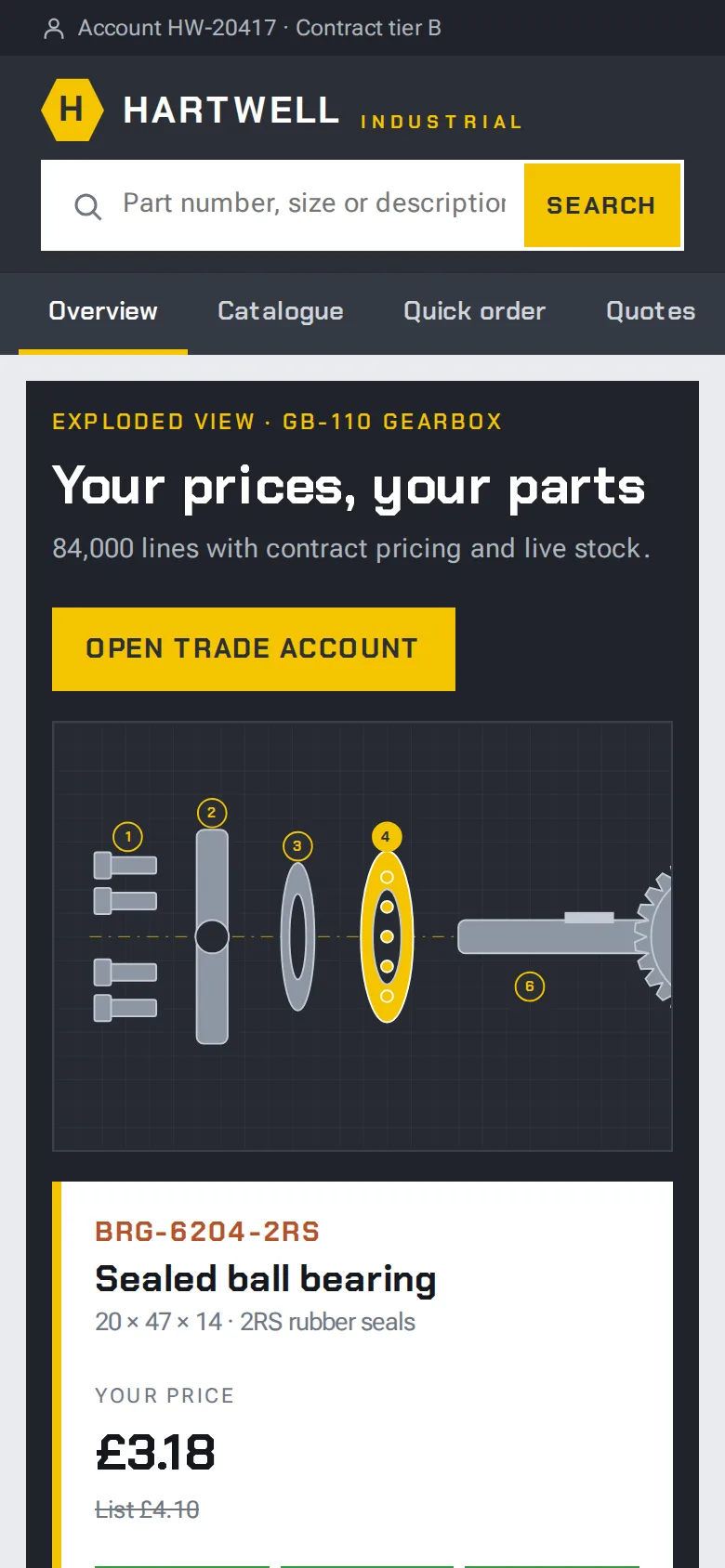
    An 84,000-SKU Magento 2 store with contract pricing, quick order and ERP-synced stock for trade accounts.

  • Chair Dentist — Bright Dental Group
    • WordPress
    • Custom theme
    • Wix & Squarespace export

    Website Migration

    Dental Group Website Migration

    Nine practice sites on Wix and Squarespace consolidated into one WordPress site — organic clicks up 74%.

Let’s Connect

Want Results Like These?

Share your project details and our experts will get back to you within one business day with the best solution — free consultation, no obligation.