Mobile Apps
Kotlin Multiplatform vs Flutter: Two Ways to Share Mobile Code
Flutter shares the entire app including the UI. Kotlin Multiplatform shares the logic and keeps native interfaces. That single difference drives everything else.
Both technologies exist to stop you writing the same app twice. They take opposite routes to get there, and the choice between them is less about performance than about how much of the user interface you want to own.
The Core Difference
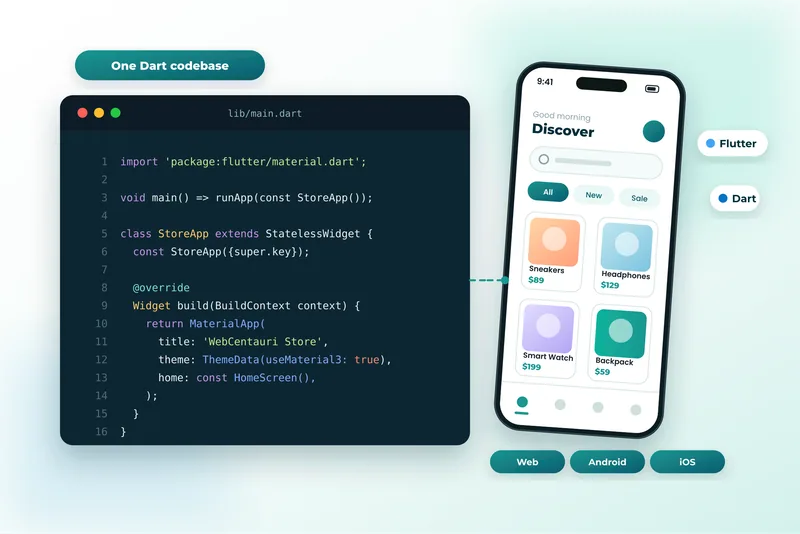
Flutter shares everything. One Dart codebase produces both apps, and Flutter draws every pixel itself rather than using the platform's native controls. What you design is what appears, identically, on Android and iOS.
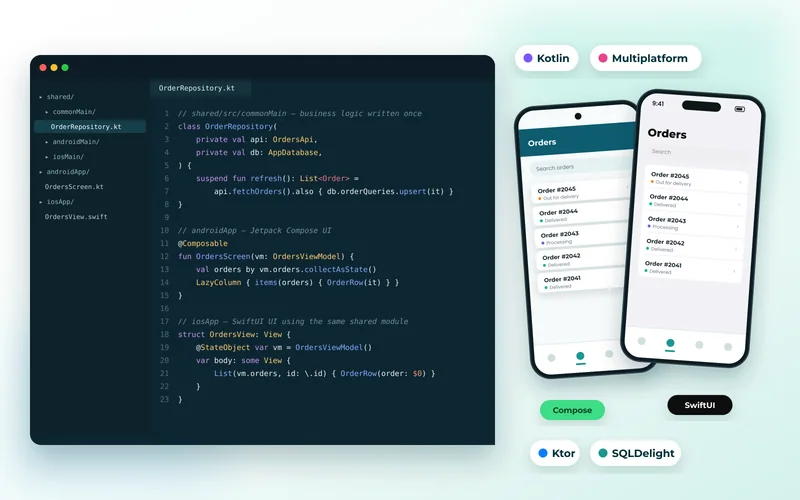
Kotlin Multiplatform shares only what you choose — typically networking, data models, business rules, validation and storage — while the interface on each platform is built natively with Jetpack Compose on Android and SwiftUI on iOS. Roughly 40–70% of the code is shared; the rest is deliberately not.
When Flutter Fits
Flutter is usually the faster and cheaper route, and the right default for most projects. It suits apps with a strong brand-led design, where looking identical on both platforms is desirable rather than a compromise. The hot reload workflow is genuinely excellent for iterating on UI.
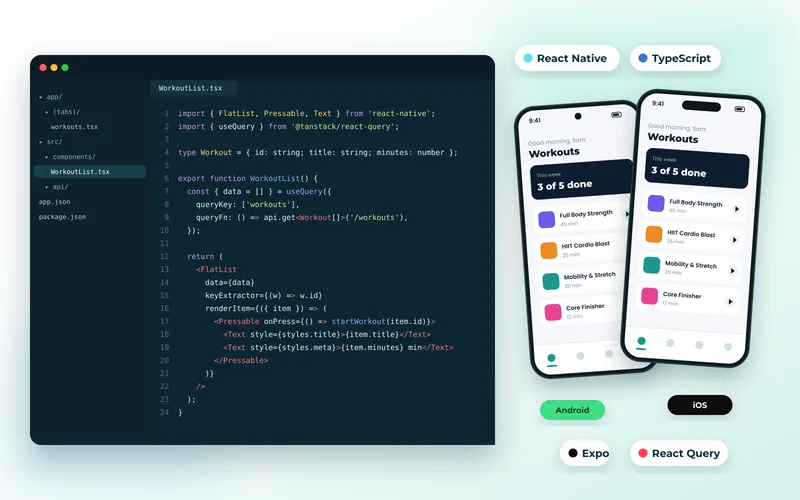
It is our most common recommendation in Flutter app development, and we used it for a gym training and daily workout app where the same branded experience on both platforms was exactly what the client wanted.
When Kotlin Multiplatform Fits
KMP suits teams that already have native expertise, or apps that must feel unmistakably native — following each platform's conventions for navigation, gestures and accessibility. Because the UI is native, deep platform integrations are straightforward rather than requiring a plugin.
It is also the gentler path for an existing native Android app: you can extract business logic into a shared module incrementally, without a rewrite. That makes Kotlin Multiplatform development attractive when you already have a working app and want to add a second platform without discarding the first.
Practical Comparison
- Time to first release: Flutter is usually faster.
- Native look and feel: KMP wins by definition.
- Hiring: Flutter developers are easier to find than KMP specialists; native Android and iOS developers are easier to find than either.
- Platform features: KMP has direct access; Flutter usually has a plugin, occasionally requiring native code anyway.
- Long-term maintenance: Flutter means one codebase to update. KMP means one shared module plus two UIs.
And the Third Option
React Native remains a strong contender, particularly for teams already fluent in React — it shares the skill set with your website. We compare it directly with Flutter and fully native approaches in Flutter vs React Native vs native app development, and offer it as React Native app development.
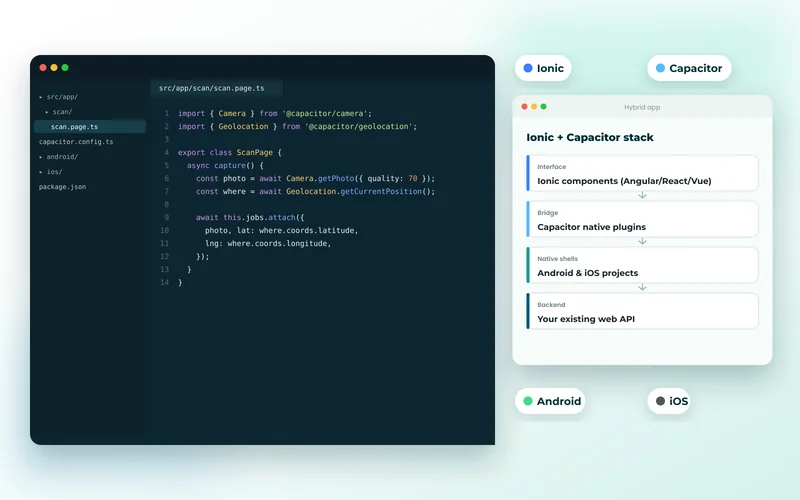
For apps that are essentially a web experience in a shell, Ionic and Capacitor can be the most economical option of all. And sometimes the right answer is still fully native Android and iOS apps — for example a warehouse scanning app built around specific hardware.
Making the Call
If you are starting fresh, have no native team, and want one consistent design: Flutter. If you have native developers, need platform-authentic interfaces, or are extending an existing native app: Kotlin Multiplatform. If your team lives in React: React Native.
All three produce apps good enough to succeed. The failure mode is rarely the framework — it is an unclear scope and a backend that cannot support the app, which is why we plan the API layer before writing app code.
Describe your app and your team and we will recommend the approach with the lowest total cost over three years, not just the lowest quote.