




Enterprise Web Application

Insurance Claims Administration Portal

An Angular portal that gave 200 claims handlers one screen in place of three legacy systems.

View live demo Opens a working demo with sample content in a new tab.
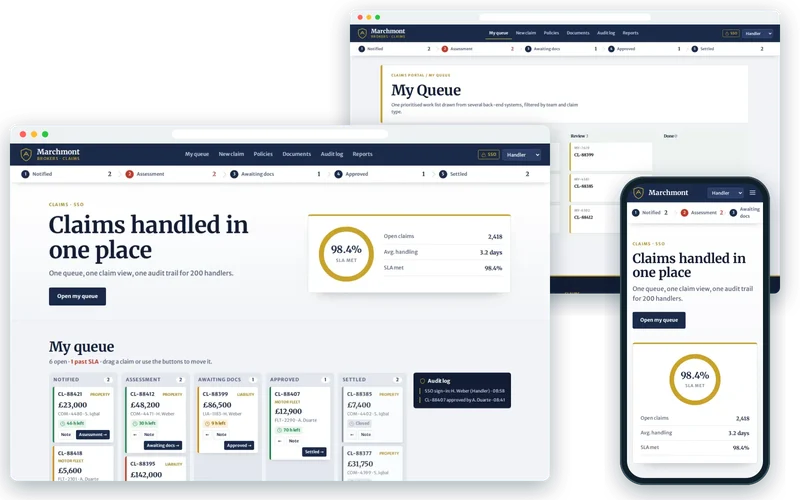
Marchmont Brokers demo on desktop and phone

On location

  • Office Work — Marchmont Brokers
    Office WorkPhoto: Benjamin Child (CC0)
  • Office Startup — Marchmont Brokers
    Office StartupPhoto: Startup Stock Photos (CC0)
  • Office Work — Marchmont Brokers
    Office WorkPhoto: energepic.com (CC0)
  • Office Work — Marchmont Brokers
    Office WorkPhoto: Charles Forerunner (CC0)
  • Office Work — Marchmont Brokers
    Office WorkPhoto: WDnet Studio (CC0)

About the Project

This project is insurance claims management software for a commercial insurance broker with around 200 claims handlers. To process one claim, a handler moved between three systems: a policy administration system, a document store and a spreadsheet of outstanding actions. Nothing reconciled automatically, SLA reporting was assembled by hand each month, and training a new handler took the better part of a quarter.

We built an Angular enterprise portal that reads from all three systems through an integration layer and presents one queue, one claim view and one set of actions. Average claim handling time fell from 5.1 to 3.2 days, SLA reporting is generated automatically, new handler onboarding shortened from around twelve weeks to five, and every claim action is recorded in a complete audit trail.

About the Client

The client is a commercial insurance broker handling property, motor fleet and liability claims for business customers. Its claims team works to service-level agreements with clients and insurers, so knowing what is outstanding — and what is about to breach — matters every day.

As a regulated business, the broker also needed to show exactly who did what on each claim and to control which handlers could see and approve which claim types. Any new system had to fit its existing identity provider and compliance processes.

Project Goals

  • Give handlers one queue and one claim view instead of three systems.
  • Shorten average claim handling time.
  • Generate SLA reporting automatically instead of assembling it by hand.
  • Make new handlers productive in weeks rather than months.
  • Record every claim action in an audit log that satisfies compliance review.

Project Overview

The Challenge and Our Solution

The Challenge

Handlers moved between three systems to process one claim: a policy administration system, a document store and a spreadsheet of outstanding actions. Nothing reconciled automatically, SLA reporting was assembled by hand each month, and training a new handler took the better part of a quarter.

Our Solution

We built an Angular portal that reads from all three systems through an integration layer, presenting one queue, one claim view and one set of actions. Standalone components and lazy-loaded feature modules keep the application fast despite its size, reactive forms handle the long, conditional claim forms with proper validation, and every action writes to an immutable audit log. Single sign-on runs through the broker’s existing identity provider with role-based access per claim type.

One Queue, One Claim View

An integration layer reads policy details, documents and outstanding actions from the three existing systems, so the portal can show a single claim view without replacing any of them. Handlers see the policy, documents, history and next actions on one screen.

The unified queue shows each handler what needs attention, ordered by urgency and SLA, so nobody has to cross-check a spreadsheet against two other systems to know what to do next.

  • Policy, documents and actions on one screen
  • Integration layer over three existing systems
  • A queue ordered by urgency and SLA
Conditional Claim Forms Built with Angular

Claim forms are long and differ by claim type: a property claim asks about the premises and cause of loss, a motor fleet claim about vehicles and drivers, a liability claim about the claimant and injury. Angular reactive forms show only the questions that apply and validate answers as the handler types.

Standalone components and lazy-loaded feature modules keep the application fast despite its size, and state is managed with RxJS and NgRx so the claim view always reflects the latest data from every system.

  • Questions that change with the claim type
  • Validation as the handler types
  • Lazy-loaded modules keep a large app fast

Single Sign-On and Role-Based Access

Handlers sign in with the broker’s existing identity provider through OpenID Connect single sign-on, so there are no new passwords to manage and leavers lose access as soon as their account is disabled centrally.

Role-based access controls which claim types each handler can see and what actions they can take, so sensitive claims are visible only to the right people and higher-value decisions follow the broker’s approval rules.

  • OpenID Connect SSO with the existing identity provider
  • Access by role and claim type
  • Central control when people join or leave

Audit Log and Automatic SLA Reporting

Every action — a status change, a note, an approval, a document added — writes to an immutable audit log with the user and time. That complete trail satisfied the broker’s internal compliance review and makes answering questions about a claim straightforward.

Because the portal knows every claim’s stage and timings, SLA reporting is generated automatically instead of assembled manually each month. Team leaders see breaches coming in time to act rather than discovering them in a monthly report.

  • Immutable audit log for every claim action
  • SLA reports generated automatically
  • Early warning before SLAs are breached

Our Process

How We Delivered It

  1. Handler Shadowing

    We followed handlers through real claims across all three systems to map the work and the workarounds.

  2. Integration Design

    The integration layer and data model for policies, documents and actions were designed with the systems’ owners.

  3. Angular Portal Build

    Queue, claim view, conditional forms and SSO were built in Angular with end-to-end tests in Playwright.

  4. Pilot Team

    A pilot group of handlers used the portal on live claims while we refined the workflow.

  5. Rollout and Training

    Teams moved onto the portal in waves, supported by shorter, task-based training.

Key Features

What We Delivered

  • Unified claim queue

    One prioritised work list drawn from several back-end systems, filtered by team and claim type.

  • Conditional claim forms

    Typed reactive forms with per-claim-type rules, drafts and clear validation messaging.

  • SSO & role-based access

    OpenID Connect sign-in with permissions scoped to claim type, value and region.

  • Audit log & SLA reporting

    Immutable action history with dashboards for stage times and SLA compliance.

Outcome

Results and Impact

  • Average claim handling time reduced from 5.1 to 3.2 days.
  • SLA reporting generated automatically instead of assembled manually each month.
  • New handler onboarding shortened from around twelve weeks to five.
  • Complete audit trail for every claim action, satisfying internal compliance review.

Client Feedback

What the Client Says

★★★★★

Two hundred handlers moved from three systems to one screen. Handling time fell from five days to just over three.

Head of ClaimsCommercial insurance broker

Services

Services Behind This Project

The Angular expertise we used to build this enterprise web application — and can bring to yours.

  • Angular Development

    Angular applications for large teams — typed architecture, RxJS data flows, standalone components, testing and long-term upgrade support.

FAQ

Frequently Asked Questions

Do we need to replace our policy system to get a single claims view?

No. An integration layer can read from your existing policy administration system, document store and other tools, and present them together in one portal. That gives handlers a single view quickly, without the cost and risk of replacing core systems, which can be modernised later if needed.

Why use Angular for an enterprise claims portal?

Angular suits large, form-heavy business applications. Its reactive forms handle long, conditional claim forms with strong validation, its structure keeps big codebases maintainable across teams, and lazy loading keeps performance good as features grow. It is a dependable choice for applications expected to be maintained for many years.

How does single sign-on work with our existing accounts?

The portal connects to your identity provider using a standard protocol such as OpenID Connect. Staff sign in with the accounts they already use, permissions can be driven by groups, and disabling someone centrally removes their access immediately. There are no separate passwords to manage.

What should an audit trail for claims include?

At minimum: who did what, to which claim, and when — status changes, notes, approvals, document uploads and edits. The log should be immutable so entries cannot be altered afterwards. A good audit trail supports compliance reviews, complaint handling and disputes without anyone reconstructing events by hand.

How can claims software reduce handling time?

Most time is lost switching between systems, re-entering data and working out what to do next. A single queue ordered by urgency, one claim view, forms that ask only relevant questions and automatic reminders remove much of that friction, so handlers spend their time deciding claims rather than finding information.

How do you roll out a new portal to a large claims team?

We start with a pilot group on live claims, fix what they find, then move teams across in waves with task-based training. Running the old and new processes side by side briefly gives confidence, and support stays close during each wave so service levels are protected throughout.

Similar Work

Related Projects

Case studies built with the same technologies or for similar needs.

  • Semi trucks line up to pick — Northline Freight
    • React
    • TypeScript
    • Node.js

    Web Application Development

    Freight Dispatch & Driver Tracking Platform

    A live dispatch board built in React and Node.js that replaced a spreadsheet-and-phone workflow for 120 drivers.

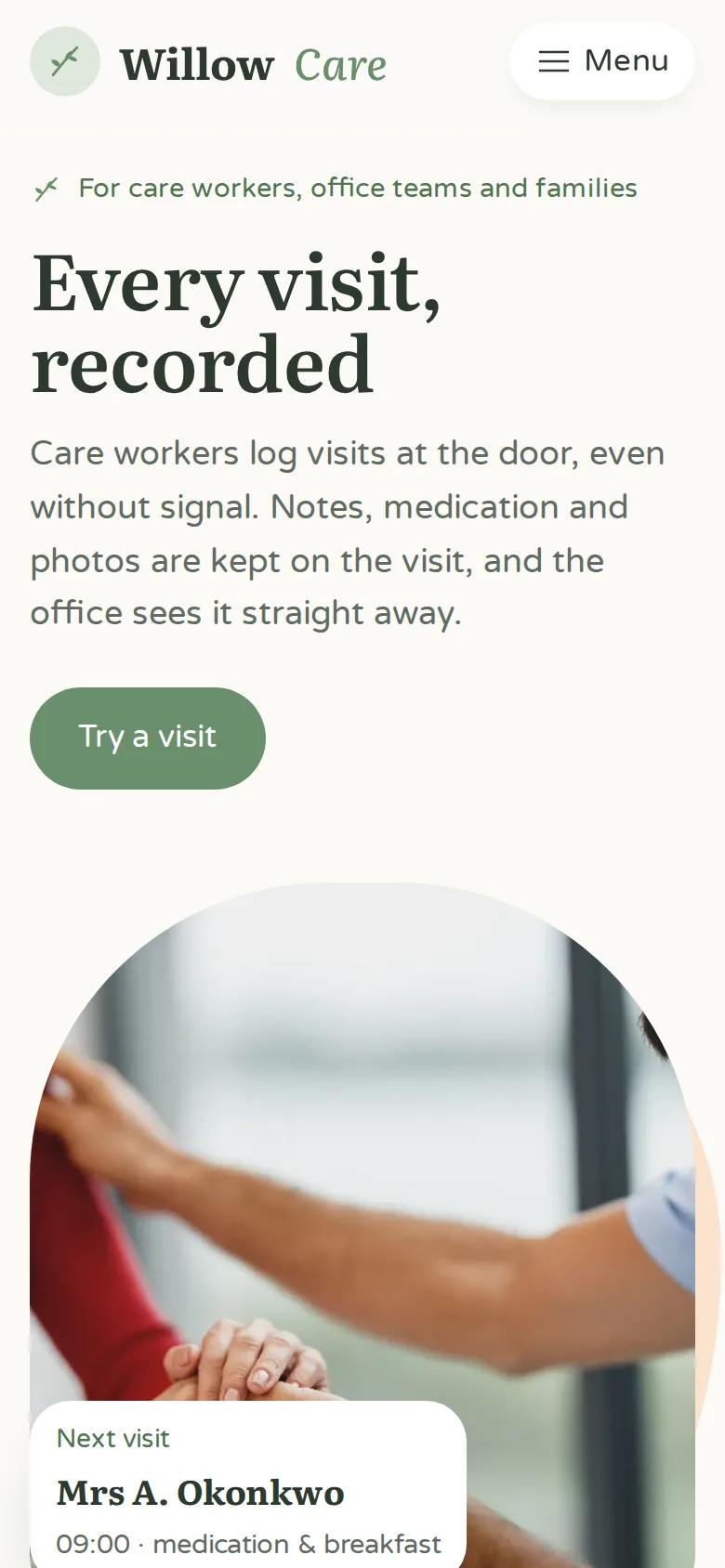
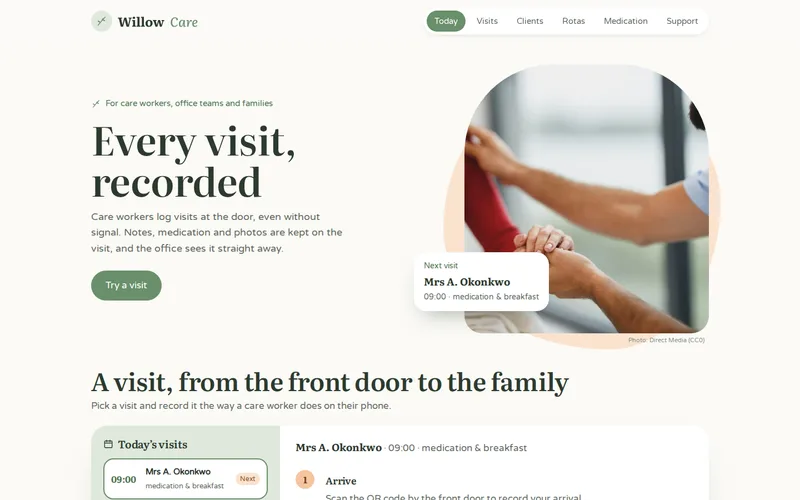
  • Senior Couple — Willow Care
    • Ionic
    • Capacitor
    • Angular

    Hybrid App Development

    Home Care Visit Logging App

    An Ionic and Capacitor app built from the provider’s existing Angular system, in the stores in seven weeks.

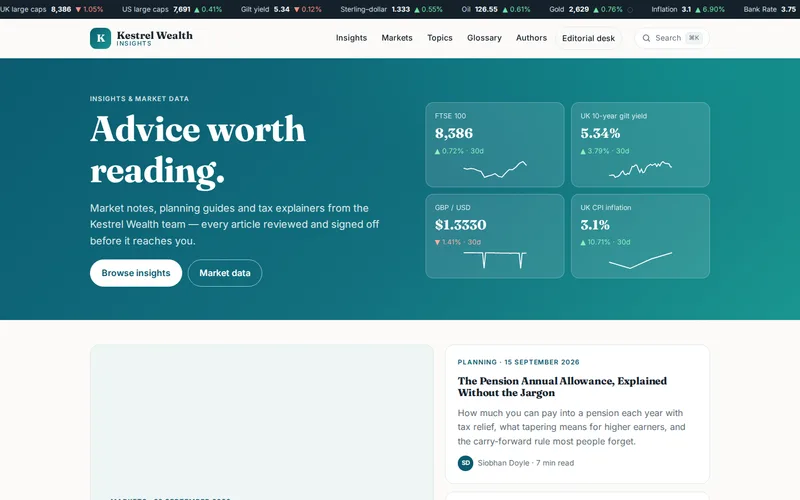
  • Kestrel Wealth demo — home page
    • Next.js
    • React
    • TypeScript

    Headless CMS Website

    Wealth Management Insights Hub

    A Next.js front end over headless WordPress that took a compliance-heavy content library from slow to near-instant.

  • Herbs Spices — The Kitchen Table
    • Astro
    • Svelte
    • TypeScript

    Publishing Website

    Food Magazine & Recipe Archive

    An Astro rebuild of a 3,850-recipe archive that cut JavaScript by two thirds and made mobile pages load in about a second.

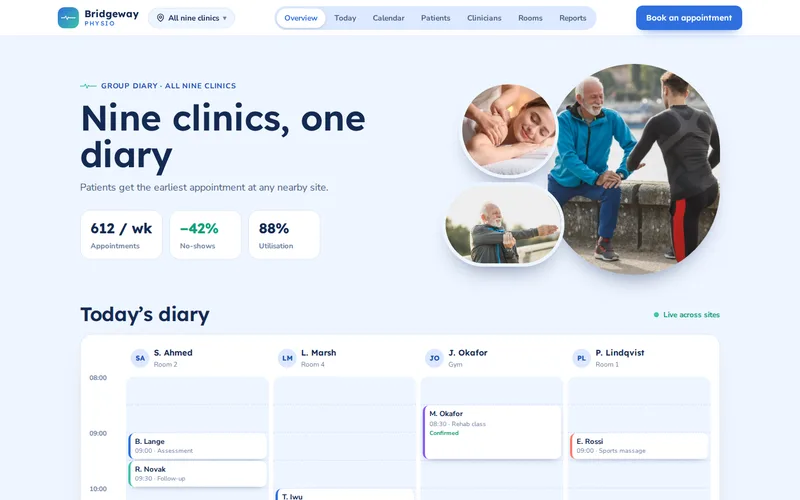
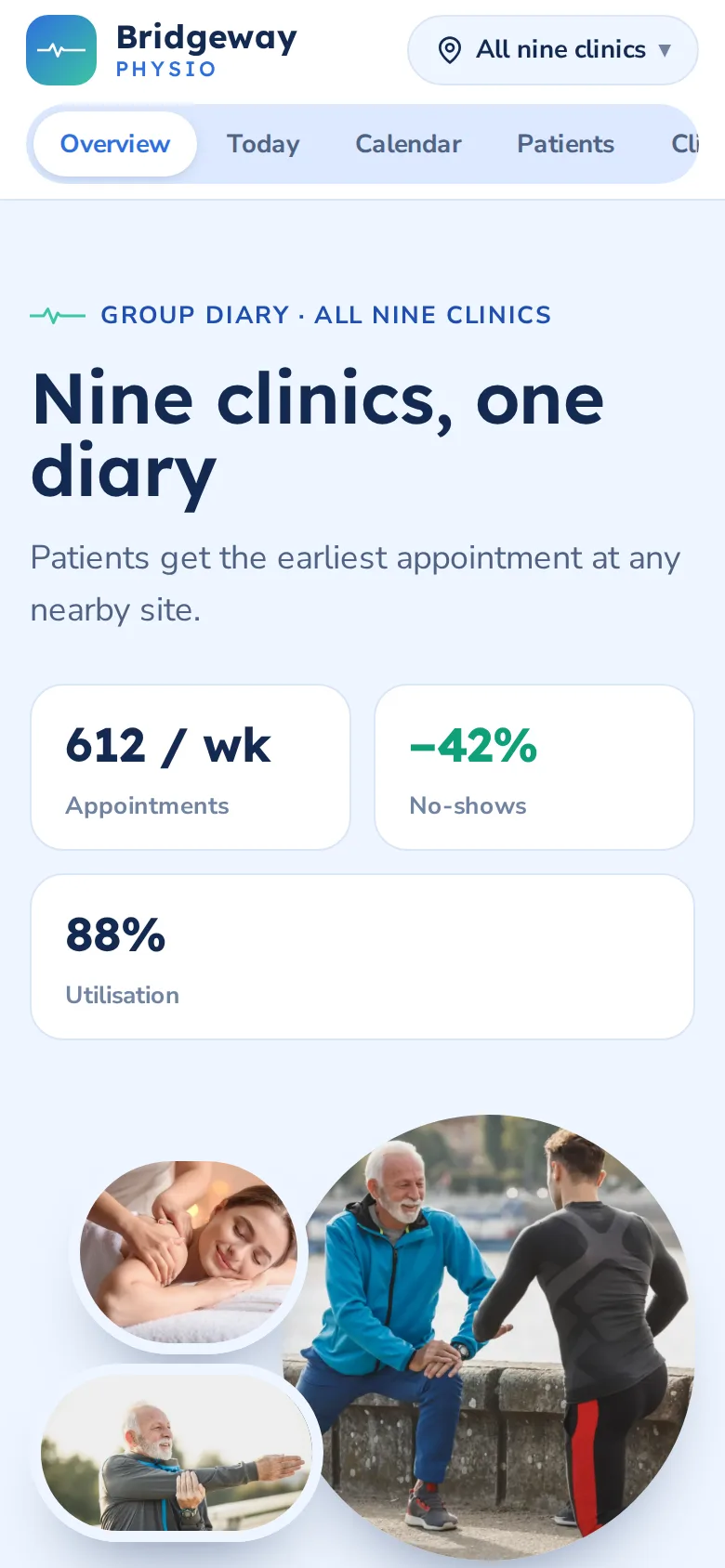
  • Stretching Exercises — Bridgeway Physio
    • .NET 9
    • C#
    • ASP.NET Core

    Enterprise Web Application

    Clinic Group Scheduling System

    An ASP.NET Core scheduling system across nine clinics, with Entra ID sign-in and automated patient reminders.

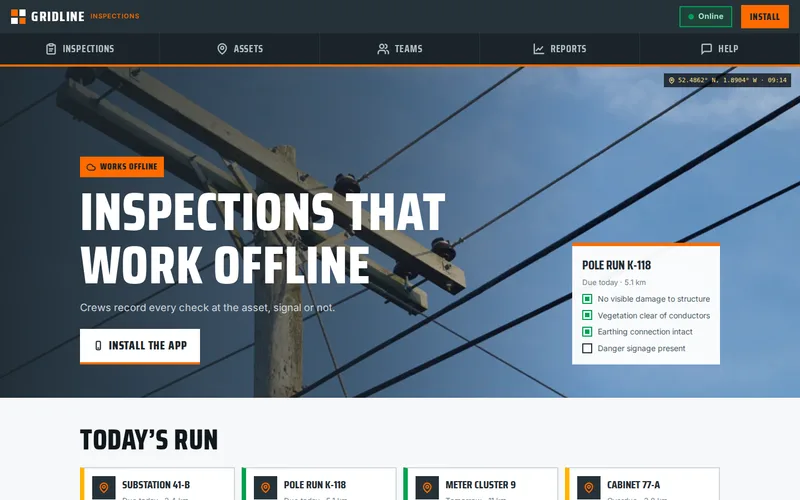
  • Power Lines — Gridline Inspections
    • Progressive Web App
    • Service Workers
    • Workbox

    Progressive Web App

    Utility Inspection Field App (PWA)

    An installable, offline-first progressive web app used by inspection crews in places with no usable signal.

Let’s Connect

Want Results Like These?

Share your project details and our experts will get back to you within one business day with the best solution — free consultation, no obligation.